
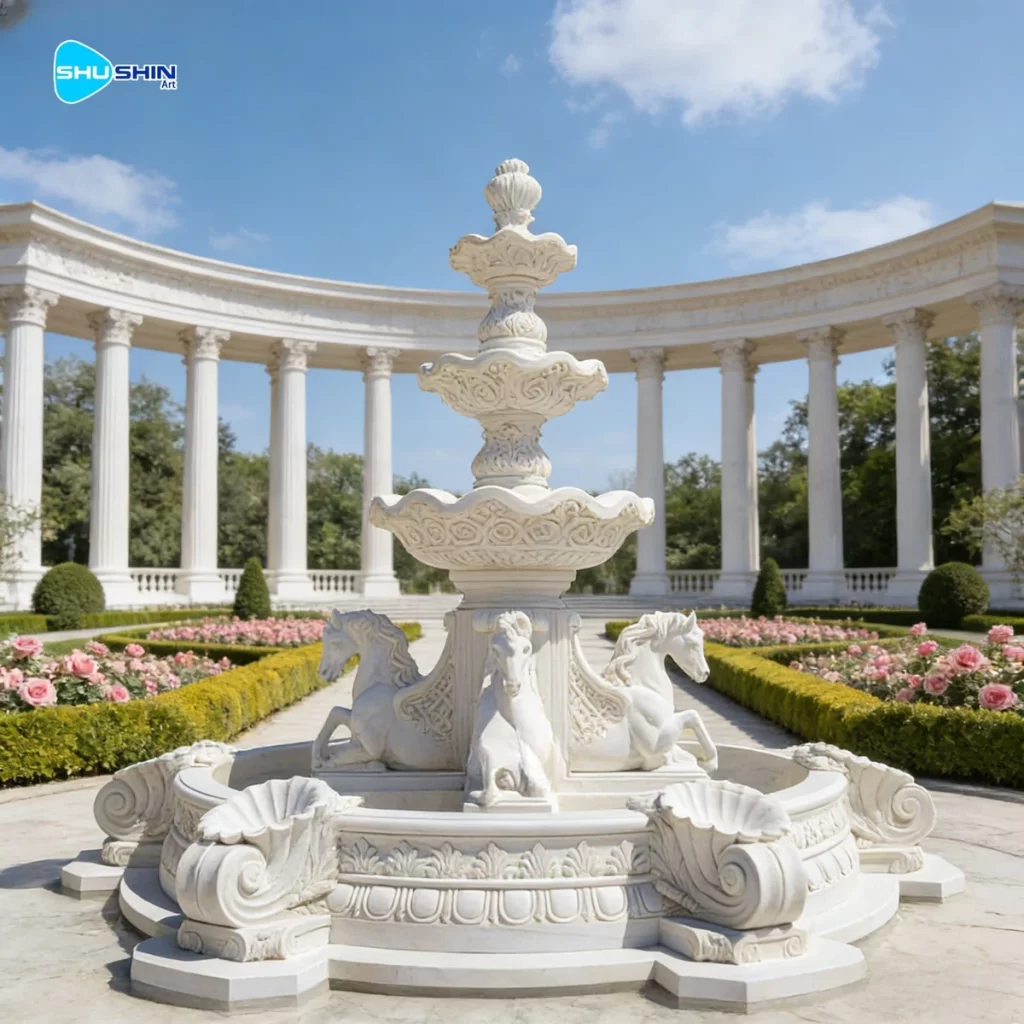
Where Garden Sculptures Actually Work
Garden sculptures do not carry a project by themselves. They work when the scale, material, and placement match the space — and when the client knows what they are committing to before production starts. This article covers what tends to go wrong, how materials behave in real outdoor conditions, and what information helps a factory give an accurate quote instead of a vague range. The same principles apply to large-scale landscape sculptures in public spaces, where the scale and site integration considerations are even more complex.
Most inquiries we receive for garden sculpture projects are not about a single “look.” They are about a set of constraints: the site dimensions, the exposure (full sun, coastal air, shaded courtyard), the budget range for the sculpture itself, and whether the client wants a focal point or a background element. A sculpture that reads well in a large estate garden can disappear in a public park. A fountain that works in a quiet courtyard may not handle the wind load of an open hillside. These are not style questions — they are engineering and placement questions that affect the final result more than the photo on a brochure does.
One pattern we see repeatedly: a client selects a sculpture based on a photo taken in a showroom or a manufacturer’s garden, then expects it to read the same way in their own space. It usually does not. The surrounding planting, the wall or hedge height, the sightlines from the house — these change the sculpture’s presence dramatically. When we discuss a garden sculpture project, the first thing we ask for is not a style reference. It is site photos and dimensions.
Material Choices
The material decision usually comes down to three things: what the site can support structurally, what the local climate does to the surface over time, and how much maintenance the owner is willing to take on. Here is how the four common materials actually perform outdoors, based on what we see in production and in projects that come back for restoration or cleaning years later.
Marble
Marble is a classic choice for garden sculpture, especially in villa projects, formal gardens, and estates where the architecture and the planting style already lean toward classical or symmetrical layouts. For outdoor use, the key is stone selection. Not all marble grades behave the same way in freeze-thaw cycles. We typically work with grades that have been used in outdoor settings before, and we will ask where the sculpture will be placed before recommending a specific stone grade.
Marble fountain pieces are common in garden projects because the material holds fine detail well — drapery, foliage, facial features. The tradeoff is maintenance. In hard-water areas, calcium buildup on fountain surfaces is real, and it shows on darker stones more than on white. If the project is a marble fountain in an outdoor garden, we usually discuss water treatment or at least a realistic cleaning schedule during the quoting stage.

Marble architectural elements can add structure and classical style to large garden projects.
Bronze
Bronze performs differently depending on the alloy and the casting method. For garden and landscape projects, we usually discuss the installation environment before locking in a patina finish, because some patinas hold up better in coastal or high-humidity locations than others. Bronzes intended for fountains need to account for water flow, pump access, and freeze protection in colder regions. These are not always obvious from a design drawing, which is why we typically ask for site photos before finalizing a bronze garden sculpture design.
There is also the question of casting method. Lost-wax casting produces a different surface quality than other methods, and for garden pieces where the viewer may be close to the sculpture, the surface detail matters. We do not recommend making material decisions from a distance — seeing a sample or a similar completed piece in person changes what clients specify once they see the difference.

Bronze animal fountains are often used as decorative water features in gardens and courtyards.
Stainless Steel
Stainless steel (typically 304 or 316L, depending on the environment) is increasingly specified for garden projects where the client wants a contemporary look — hotels, cultural venues, and modern villa landscapes. The material does not “age” in the same way as bronze or marble, which is either an advantage or a disadvantage depending on the design intent. In coastal or high-chloride environments, 316L is the more conservative choice, but the decision depends on the specific site.
One practical note: stainless steel sculptures in garden settings tend to show water spotting and dust more than clients expect. If the piece is a fountain or will be near irrigation overspray, the finish selection (polished vs. satin vs. bead-blasted) affects not just appearance but also cleaning frequency. This is worth discussing before production, not after installation.

Stainless steel can create a contemporary focal point for gardens, hotels, and outdoor courtyards. (Design example — final appearance depends on site and finish selection.)
Fiberglass
Fiberglass is sometimes used for large-format garden sculptures where weight is a constraint — rooftop gardens, terraces, or temporary installations. It is not our primary material for permanent outdoor installations, and we usually discuss expected service life openly if a client is considering it. For indoor or covered outdoor use, it can be a practical choice. For fully exposed outdoor sites, we typically recommend discussing bronze or stainless steel as alternatives during the design phase.
Fiberglass also behaves differently in freeze-thaw conditions compared to natural stone or metal. The gel coat can craze over time if the piece is exposed to repeated freezing while holding moisture. For projects where the sculpture will be outdoors year-round in a climate with freezing winters, we usually advise considering other materials unless the client understands the limitation.
Sizing and Proportion
The most common mistake in garden sculpture selection is choosing a size based on a photo without visiting the site or at least reviewing site dimensions and photos. A sculpture that reads as “large” in a showroom or in a photo with no scale reference can look undersized in a garden that has mature trees, large hedges, or substantial hardscaping. We usually ask for at least one photo with a person standing in the intended location, or a dimensioned site plan, before confirming a size recommendation.
As a general reference point (not a rule), many garden sculptures for villa or estate projects fall in the region of 1.2m to 2.5m in height for a primary focal point. Background or supporting pieces (animal sculptures, urns, smaller figurative works) are often in the 0.6m to 1.2m range. These are reference ranges, not specifications — the right size depends on sightlines, planting maturity, and how the space is used.
Surface Treatment
Surface finish affects not just appearance but also maintenance. A high-polish stainless steel mirror finish looks dramatic in a garden setting, but it will show water spotting, dust, and fingerprints more than a satin or bead-blasted finish. Similarly, a dark patina on bronze will show water staining in a fountain application differently than a lighter patina. These are not reasons to avoid a finish — they are reasons to choose knowingly.
For marble, surface finish is usually about honed vs. polished. Honed finishes tend to show less staining in outdoor applications, particularly for fountain pieces where water runs continuously over the surface. Polished marble shows more reflection but also more marking. The discussion is part of the design confirmation, not an afterthought. We usually recommend seeing a sample of the finish on the actual material before finalizing, especially for large pieces where the finish covers a lot of visual area.
Factory Suggestion: If the sculpture is going outdoors and will be exposed to irrigation overspray, pool splash, or fountain water, decide the finish before production starts. Changing a surface finish after installation is far more expensive than getting it right in production. For stainless steel in coastal areas, 316L is usually the more conservative choice, but it still needs periodic maintenance — it is not a “fit and forget” material, regardless of what a specification sheet may imply. Also: if the site has mature trees, consider what falls on the sculpture seasonally. Leaf tannins on marble or bronze can cause staining that is annoying to remove and may require professional cleaning.
Base and Installation
The base is not a detail — it is a structural and visual decision that affects safety, stability, and how the sculpture reads in the landscape. For garden sculptures, the base choice depends on:
- Substrate: Soil (needs a concrete foundation), paved surface (can sometimes be bolted, depending on thickness), or raised planter (needs to be designed for the load).
- Height-to-base ratio: Taller pieces need proportionally larger or heavier bases, particularly in wind-exposed sites. Wind load is real and needs to be calculated, not guessed.
- Access: If the sculpture will be installed in a courtyard with limited crane or forklift access, the piece may need to be assembled on-site. This affects both the design and the budget.
- Drainage: For fountain bases, water drainage and freeze protection need to be designed in. A base that traps water in winter will eventually crack, regardless of material.
For fountain sculptures, the base usually incorporates the water reservoir, pump access, and plumbing connections. This is not a decorative afterthought — it is part of the design from the first drawing. We typically ask for site dimensions and access information before finalizing a fountain base design, because retrofitting plumbing into a finished base is expensive and rarely clean.
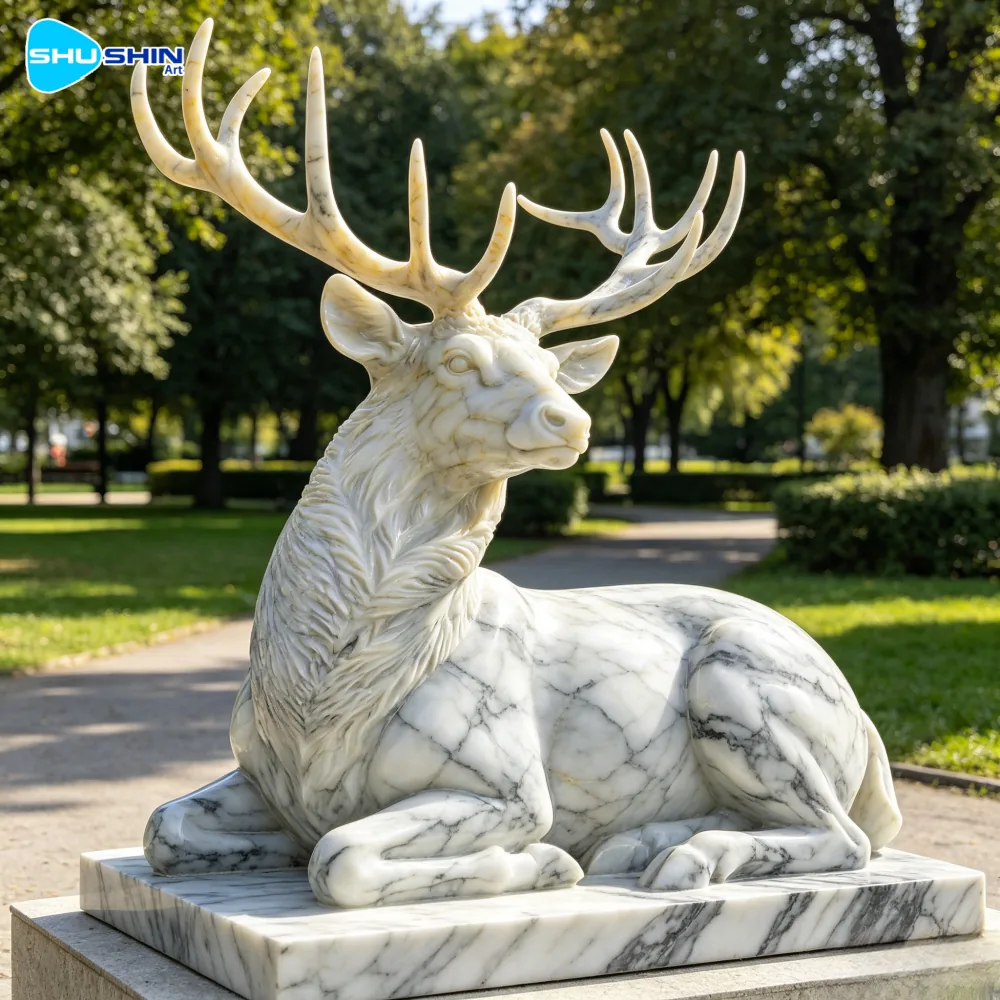
Animal sculptures are commonly used to create natural focal points in villa gardens and park landscapes.
Packaging and Shipping
Garden sculptures — particularly fountain assemblies and large marble pieces — need crating that accounts for the fact that they cannot be replaced quickly if damaged in transit. The crating approach depends on the material and the destination. Bronze pieces are typically crated with custom timber framing and foam buffering at known stress points. Marble pieces need additional care because natural stone can have inherent fissures that do not show until after production — the crating needs to account for this by supporting the piece at multiple points, not just at the base.
Shipping timelines vary by destination and by whether the sculpture is being sent as a finished piece or as a kit for on-site assembly. For international shipments, customs documentation needs to describe the contents accurately — “garden sculpture” or “decorative fountain, marble” rather than vague descriptions. We handle export crating regularly and can discuss crating standards during the quoting process. For some destinations, additional material or compliance documents may be requested depending on the product material and local import requirements. This is worth clarifying before production, not at the port.
What to Prepare Before Requesting a Quote
The more specific information you can provide upfront, the more accurate the quote will be — and the fewer surprises there will be later. Here is what helps:
- Site photos: At least two angles, ideally with a person or an object (bench, planter) for scale. Overhead drone photos are also useful for larger estate or park projects.
- Intended location dimensions: Not just the footprint, but the surrounding space — sightlines matter. Also note: is the sculpture visible from the house? From the entrance? From a terrace?
- Material preference or constraint: If the project is in a coastal area, stainless steel 316L or appropriate bronze alloy should at least be discussed. If the site has freeze-thaw, marble grade and fountain plumbing protection need to be specified.
- Is it a fountain or a dry sculpture? This changes the base design, the crating, and the installation sequence. For fountains, pump access and electrical connection need to be planned into the hardscaping, not added later.
- Access for installation: Can a crane or forklift reach the site? If not, the sculpture may need to be assembled on-site, which affects both the design (can it be sectionalized?) and the installation budget.
- Budget range for the sculpture: This is uncomfortable information to share, but it helps avoid designing something that cannot be produced within the available budget. We will not publish or discuss your budget with third parties — it is simply a design constraint, like dimensions or material.
- Timeline: When does the sculpture need to be installed? Production timelines for custom garden sculptures are typically measured in weeks, not days, and shipping adds additional lead time. Rush orders are sometimes possible, but they may limit the time available for detailed refinement and project coordination.
If you are a landscape architect, designer, or specifying for a hotel or villa project and want to discuss what works for your specific site, we can usually give a realistic assessment within a few exchanges. Garden sculpture projects work best when the sculpture, the site, and the maintenance expectations are all discussed before production starts — not when the crate arrives on-site.
Related: Marble Garden Decorative Sculpture · Bronze Outdoor Landscape Sculpture · Marble Fountain Sculpture · Bronze Fountain Sculpture
Contact our team to discuss your garden sculpture project.