
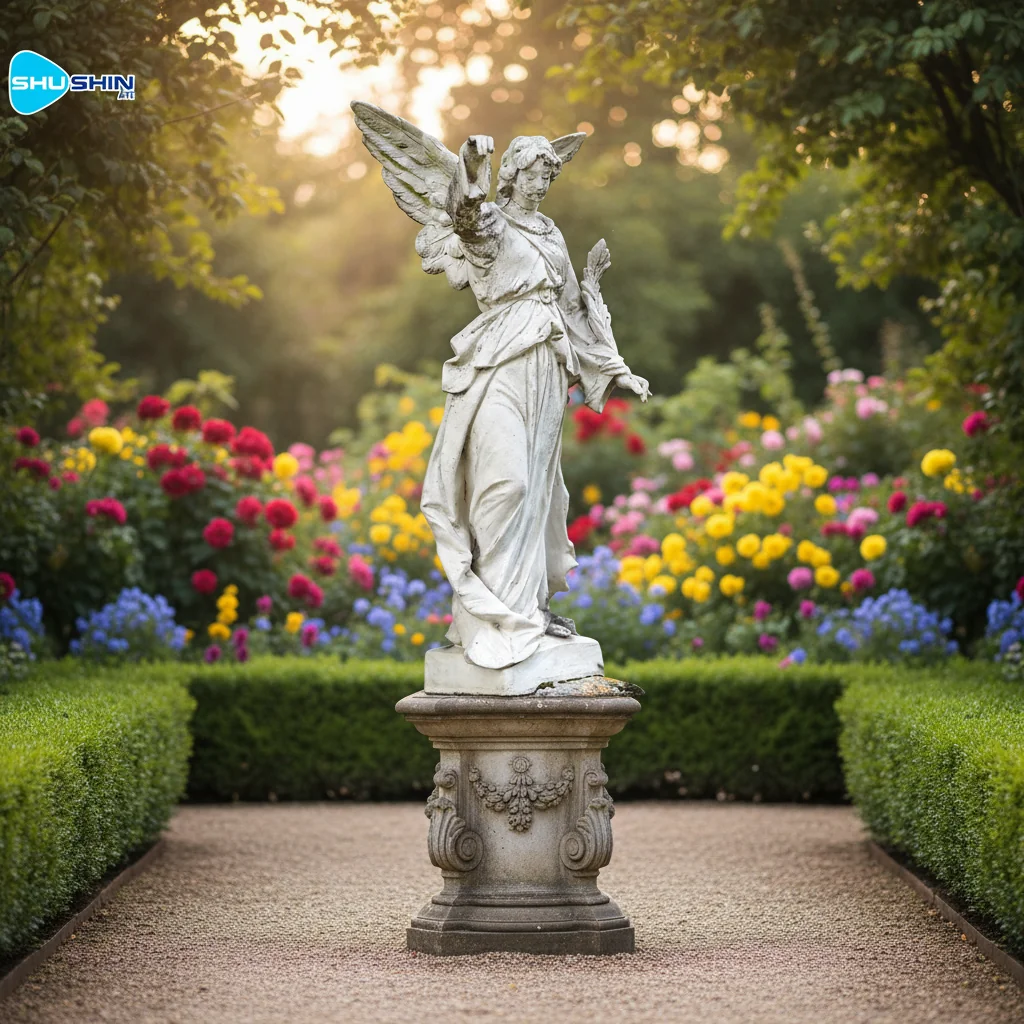
Most marble sculpture pricing articles focus on size and complexity as the primary cost drivers. They are wrong. Material selection — the specific type, grade, and origin of the marble — accounts for 70% or more of the price difference between comparable sculptures. A life-size figure carved from Italian Carrara Bianco Carrara will cost two to three times more than the same design carved from Quyang white marble, and in many applications, the visual and structural difference is negligible.
This guide explains the material landscape, gives you the data to make informed decisions, and shows you where the real value lies in the 2026 marble sculpture market.
Understanding Marble Types and Their Price Impact
Marble is metamorphic limestone — calcium carbonate recrystallized under heat and pressure. The specific conditions of formation determine the grain structure, color, translucency, and hardness that define each marble variety. These properties directly affect both the carving process and the finished sculpture’s appearance.
Carrara Marble (Italy): The Premium Standard
Carrara marble from Tuscany, Italy, has been the benchmark for sculpture since Michelangelo selected his blocks from the Fantiscritti quarries. The fine-grain varieties (Bianco Carrara C, Statuario) provide exceptional translucency, allowing carved flesh areas to glow when backlit — a quality that distinguishes premium figure sculpture.
For 2026, Carrara marble blocks suitable for sculpture are priced at $3,500-$6,000 per cubic meter, depending on grade and grain orientation. A life-size figure requires approximately 1.5-2.0 cubic meters of rough block, placing the raw material cost alone at $5,250-$12,000.
Quyang White Marble (China): The Value Leader
Quyang white marble — locally called “Hanbaiyu” (汉白玉) — has been quarried in Hebei Province for over 2,000 years. The fine-grain varieties share many properties with Carrara: similar hardness (Mohs 3-4), comparable translucency, and a clean white base color that accepts patina and surface treatments well.
The price advantage is substantial. Quyang white marble blocks are priced at $800-$1,800 per cubic meter — 60-75% less than equivalent Carrara grades. For a life-size figure, the raw material cost drops to $1,200-$3,600, freeing budget for additional craftsmanship, larger scale, or multiple pieces.
The visual difference between Quyang white and Carrara is subtle in most applications. In controlled gallery lighting, a trained eye can distinguish the slightly warmer tone of Quyang marble. In outdoor landscape settings, hotel lobbies, and commercial installations — where most marble sculptures are placed — the difference is effectively invisible.
Egyptian Yellow Marble: The Warm Alternative
Egyptian yellow marble (also called “Galala” or “Royal Yellow”) provides a warm cream-to-gold tone that works exceptionally well in Mediterranean, Middle Eastern, and tropical design contexts. The material is harder than most white marbles (Mohs 4-5), providing better freeze-thaw resistance for outdoor applications in cold climates.
Pricing for Egyptian yellow marble blocks sits between Quyang white and Carrara: $1,200-$2,500 per cubic meter. The color premium over white marble is justified by the material’s superior weathering characteristics and distinctive warm appearance.
Indian Green Marble: The Exotic Option
Indian green marble (Udaipur Green) provides a deep green color with white veining that creates dramatic visual impact. The material is significantly harder than white marble (Mohs 4-5), requiring more aggressive tooling but producing excellent surface detail retention.
Indian green marble is priced at $1,000-$2,200 per cubic meter, making it competitive with Egyptian yellow while offering a completely different aesthetic. The material is particularly popular for corporate installations and luxury hospitality projects where a distinctive color statement is desired.
Size and Cost: The Exponential Relationship
Marble sculpture costs do not scale linearly with size. Doubling the height of a sculpture typically triples or quadruples the cost, because the volume of stone increases by the cube of the height, and the carving time increases proportionally with volume.
Small Sculptures (30-60cm)
Small marble sculptures — desk pieces, garden ornaments, small figurines — typically range from $500 to $3,000. At this scale, the material cost is relatively low, and the price is dominated by carving labor and overhead. The per-unit cost is higher than larger pieces because fixed costs (block selection, roughing, finishing) are spread across less material.
Medium Sculptures (60-150cm)
Medium-scale marble sculptures — the most common category for landscape and interior decoration — range from $3,000 to $15,000. This is the sweet spot for most commercial projects, offering sufficient visual impact without the exponential cost increase of larger scales.
For landscape architects specifying marble sculptures for hotel gardens, corporate campuses, or residential developments, the 100-120cm range offers the best balance of visual presence and budget efficiency.
Large Sculptures (150-300cm)
Large marble sculptures — life-size figures, large animal groups, monumental abstracts — range from $15,000 to $80,000. At this scale, structural engineering becomes a significant cost factor. Internal armatures must be designed to support the marble against wind loads, seismic forces, and its own weight over decades of outdoor exposure.
Monumental Sculptures (300cm+)
Monumental marble sculptures — public art installations, civic monuments, landmark pieces — typically range from $80,000 to $500,000+. At this scale, the project involves structural engineers, foundation designers, and installation specialists in addition to the carving team. The cost structure shifts significantly toward engineering and logistics.
How Material Grade Affects Price Within the Same Marble Type
Even within a single marble type, grade variations create significant price differences. Understanding these grades helps you specify the right material for your application without overpaying.
Grade A: Museum Quality
Museum-grade marble has uniform color, consistent grain structure, no visible veining or inclusions, and exceptional translucency. This grade is specified for figure sculpture, portrait busts, and any work where surface quality is the primary aesthetic consideration. Museum-grade material commands a 40-60% premium over standard grades.
Grade B: Commercial Premium
Commercial premium marble has minor color variations, subtle veining, and occasional small inclusions that do not affect structural integrity. This grade is appropriate for most landscape sculpture, architectural elements, and decorative work where the overall form matters more than surface perfection. This is the standard grade we recommend for most commercial projects.
Grade C: Standard Commercial
Standard commercial marble has more pronounced color variations, visible veining, and occasional larger inclusions. This grade is suitable for rough-textured sculptures, rustic garden pieces, and applications where the natural stone character is part of the design aesthetic. Standard grade provides the best value for budget-conscious projects.
Frequently Asked Questions
How much does a life-size marble statue cost in 2026?
A life-size marble statue (approximately 180cm) from a professional carving studio typically costs between $12,000 and $45,000, depending on marble type, grade, design complexity, and finish quality. Using Quyang white marble instead of Carrara can reduce costs by 40-60% with minimal visual difference in most applications.
Is Quyang marble as good as Italian Carrara?
For most commercial applications — landscape sculpture, hotel lobbies, corporate installations — Quyang white marble provides comparable visual quality to Carrara at 60-75% lower material cost. The differences are subtle: Carrara has slightly warmer translucency and more consistent grain. In outdoor settings, the difference is effectively invisible.
What marble is best for outdoor sculpture?
For outdoor sculpture in cold climates, harder marbles with lower porosity perform better. Egyptian yellow marble (Mohs 4-5) and Indian green marble (Mohs 4-5) offer better freeze-thaw resistance than most white marbles. For outdoor applications in any climate, we recommend applying a penetrating sealer to reduce water absorption.
How long does marble sculpture last outdoors?
With proper material selection and periodic maintenance, marble sculpture can last centuries outdoors. The Parthenon marbles have survived 2,500 years of exposure. The key factors are material hardness, drainage design (avoiding horizontal surfaces where water pools), and periodic cleaning to prevent biological growth.
Related Resources
- Custom Marble Sculptures — Our marble carving capabilities and material options
- Marble Sculpture Collection — Standard designs ready for customization
- Stainless Steel Sculpture Cost Guide 2026 — How steel pricing compares to marble
- Factory Tour — Video walkthrough of our Quyang marble carving workshop
- Request a Marble Quote — Submit your project for a material-specific proposal