
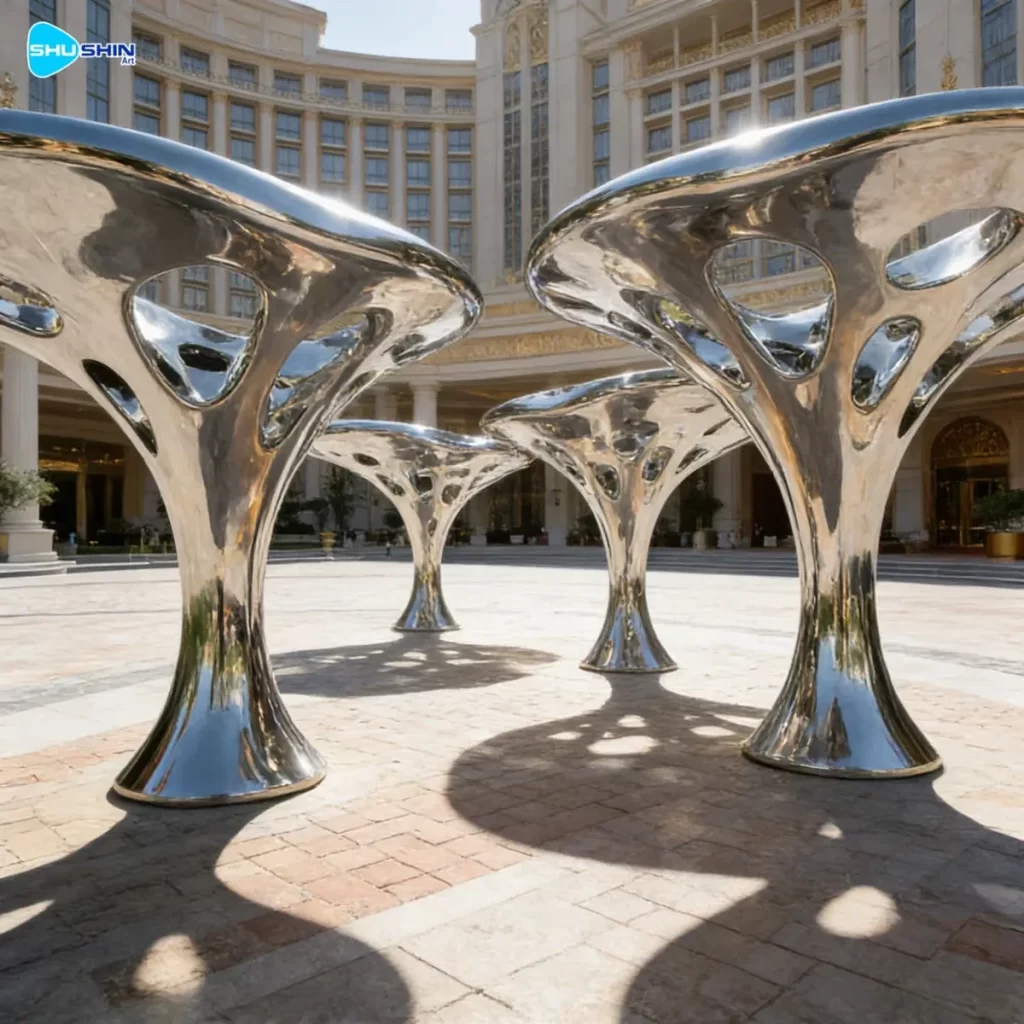
Conceptual Design Phase: Site Integration and Scale
Large-scale sculpture in public spaces carries a different set of constraints than private commissions or gallery work. A piece that reads well in a concept render can behave very differently once it is craned into place, exposed to wind load, and left to age in an open environment. For landscape architects, architects, developers, and public art procurement teams, the relevant questions tend to center on material behavior, structural integration, maintenance cycles, and the coordination required to get a piece from factory to site without avoidable delays.
The gap between a concept drawing and an installed piece is where most project risk lives. A sculpture that looks straightforward in a presentation may require a specific crane size, a particular foundation design, and a site access path that was not part of the original landscape drawings. Addressing these items during the design phase is usually more effective than adapting to them after fabrication has already started.
Sightline analysis is part of site placement as well. A sculpture that is intended to be seen from a distance—for example, from a building entrance or across a plaza—needs a different massing and surface treatment than one that is meant to be viewed up close. The same piece can read very differently depending on the typical viewing distance, and this affects both material choice and surface finish.
Scale studies at the concept stage often use scaled site plans or perspective overlays to check how the sculpture interacts with surrounding architecture, planting masses, and pedestrian circulation. This step is not only about visual fit; it also helps identify potential conflicts with underground utilities, tree root zones, or planned hardscape changes that might affect the sculpture’s base or foundation later.
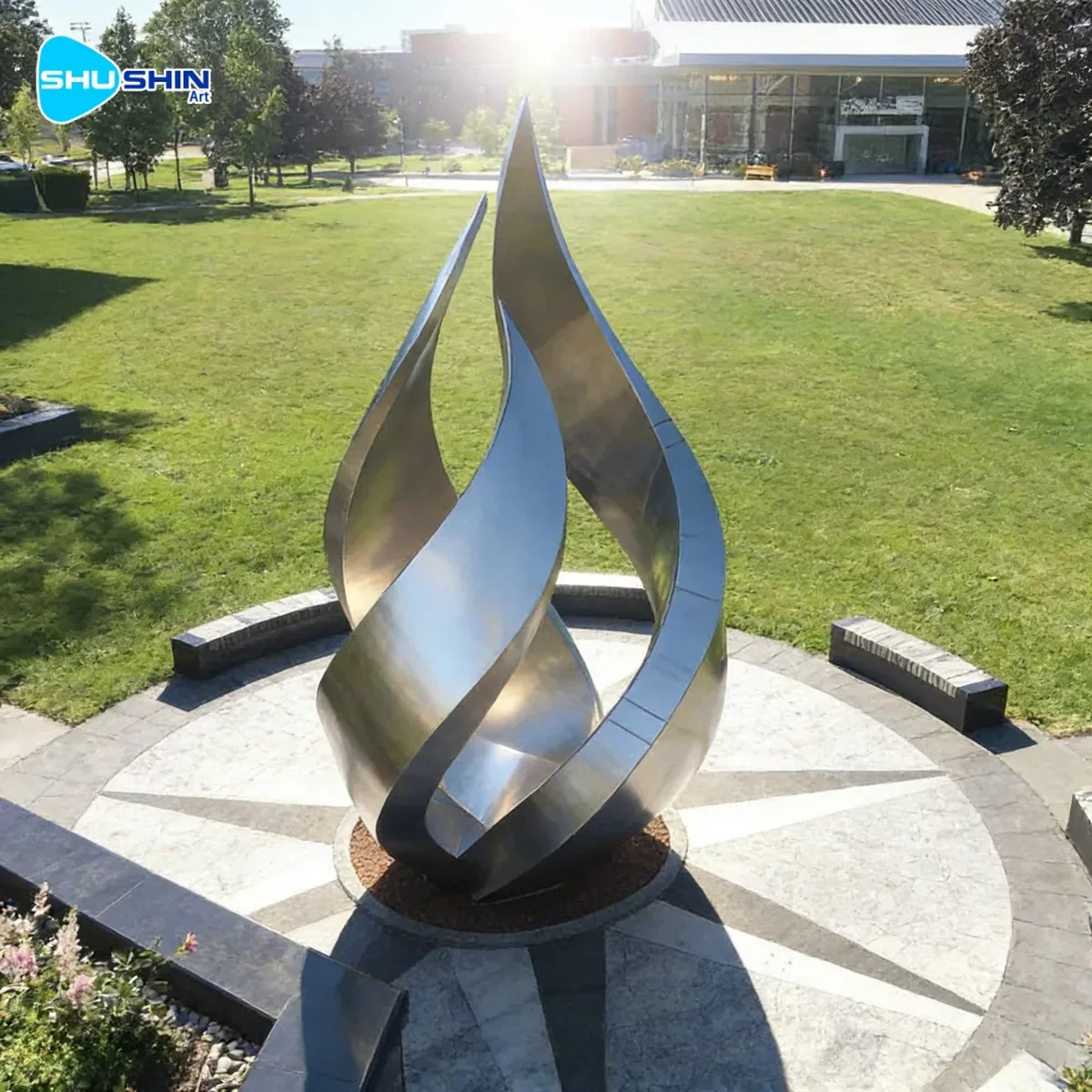
Outdoor landscape sculptures need to match the scale, sightlines, and movement patterns of the surrounding space.
Material Specification: Technical Performance
Public art installations are expected to remain in place for years without requiring constant attention or showing premature deterioration. The three materials that dominate this space—stainless steel, bronze, and marble—each handle outdoor exposure differently, and the choice usually comes down to the site conditions, the expected maintenance access, and the visual effect the project is after. The same material considerations apply to garden sculptures, though the maintenance access and scale considerations differ.
The selection process often starts with a simple question: what does the site tolerate in terms of maintenance? A coastal park with no on-site maintenance team may point toward stainless steel with a brushed finish, while a formal plaza with regular cleaning crews can support a broader range of finishes and materials.
Stainless Steel
Stainless steel is frequently selected for outdoor landscape sculpture because of its weather resistance and surface versatility. In coastal, humid, or polluted environments, 316L stainless steel is often recommended for better corrosion resistance, depending on site conditions and project requirements. The surface can be polished to a mirror finish, brushed for a softer reflectivity, or bead-blasted for a matte appearance. Each finish interacts with light and surroundings in a different way, and the choice affects not only the look but also the cleaning frequency.
One practical consideration with stainless steel is fingerprint and stain visibility. Mirror finishes show marks readily and may require more frequent maintenance in high-touch areas. Brushed or satin finishes are less demanding in this regard. For pieces placed near water features or heavy foot traffic, finish selection is often guided by how much maintenance access the site allows.
The reflective quality of stainless steel also changes with the surrounding environment. In urban settings with glass buildings, a mirror-finished sculpture can visually merge with the surroundings, creating interesting optical effects. In landscape-dominated settings, the reflection of greenery and sky can make the sculpture feel integrated with the site. These effects are difficult to predict from renderings alone and are worth discussing during the design phase.
Bronze
Bronze has a long track record in outdoor public art because of its mechanical strength and its ability to hold fine detail through the casting process. For landscape-scale work, silicon bronze or other suitable casting bronze alloys are commonly used, depending on the project’s structural and aesthetic requirements. The patina—the surface color that develops naturally or is chemically accelerated—can be tuned to sit calmly in a green landscape or to read as a strong accent in an urban hardscape.
A practical note: bronze develops a living surface. In many contexts this is desirable; in others, it may be seen as unpredictable. If the project calls for a more stable color over time, surface coating or periodic maintenance should be discussed during the specification stage, not after installation.
Marble and Stone
Marble brings a different set of properties. It reads as substantial and permanent, and it interacts with light in a way that metal does not. For public installations, the selection tends to focus on weather-resistant varieties and on forms that avoid thin cantilevers or delicate joins that could be vulnerable to impact or thermal movement. Sealing is often part of the discussion, but the frequency and method depend on the stone type, the local climate, and the level of maintenance the site can support.
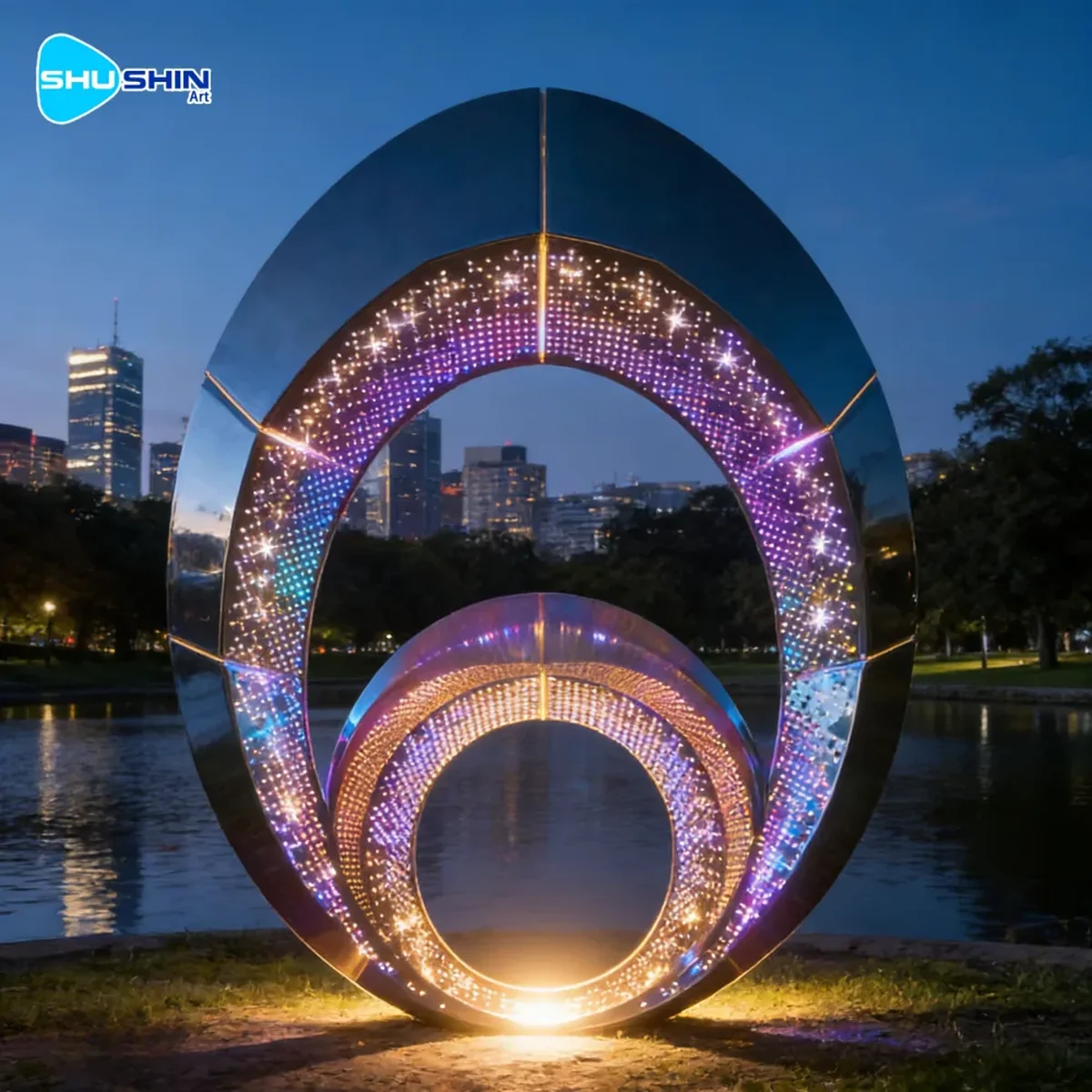
Lighting, reflection, and surrounding architecture can change how a public sculpture is experienced after dark.
Structural Engineering Requirements
Even when a sculpture looks like a pure art piece, it still needs to meet structural safety requirements for its installation location. The specific requirements vary by country and jurisdiction, but several considerations appear consistently across projects.
Wind load is one of the primary structural drivers for tall or large-surface outdoor sculptures. The calculation takes into account the local basic wind speed (from building codes), the terrain exposure category, and the geometry of the sculpture. The output informs the foundation size, the anchorage design, and—for hollow metal pieces—whether internal bracing or stiffeners are needed to prevent deformation under load.
For sculptures with large projected areas or unconventional geometries, computational fluid dynamics (CFD) analysis is sometimes used to refine the wind load estimate beyond what a simplified code formula provides. This level of analysis is more common for pieces that are tall, slender, or located in hurricane-prone or typhoon-prone regions.
Foundation design is influenced by several site-specific factors: soil conditions, groundwater level, nearby structures, and whether the sculpture will be installed on hardscape (concrete pad, paved plaza) or landscape (soil, garden bed). A foundation that is appropriate for one site may not transfer to another, which is why generic foundation drawings are rarely sufficient for final installation.
Another practical consideration is the long-term cleaning method. For pieces with mirror-polished surfaces, on-site polishing may be needed every few years depending on the environment. For brushed or patinated surfaces, the maintenance is usually less intensive, but the access requirement remains. Discussing these items before fabrication helps avoid a situation where the sculpture is installed but cannot be maintained safely.
Access for maintenance and cleaning is sometimes overlooked in the design stage. A sculpture with a highly reflective finish or a patinated surface may need periodic attention, and the design should consider whether access equipment can reach the piece without damaging surrounding landscaping or hardscape. These are not glamorous questions, but they affect long-term satisfaction with the installation.
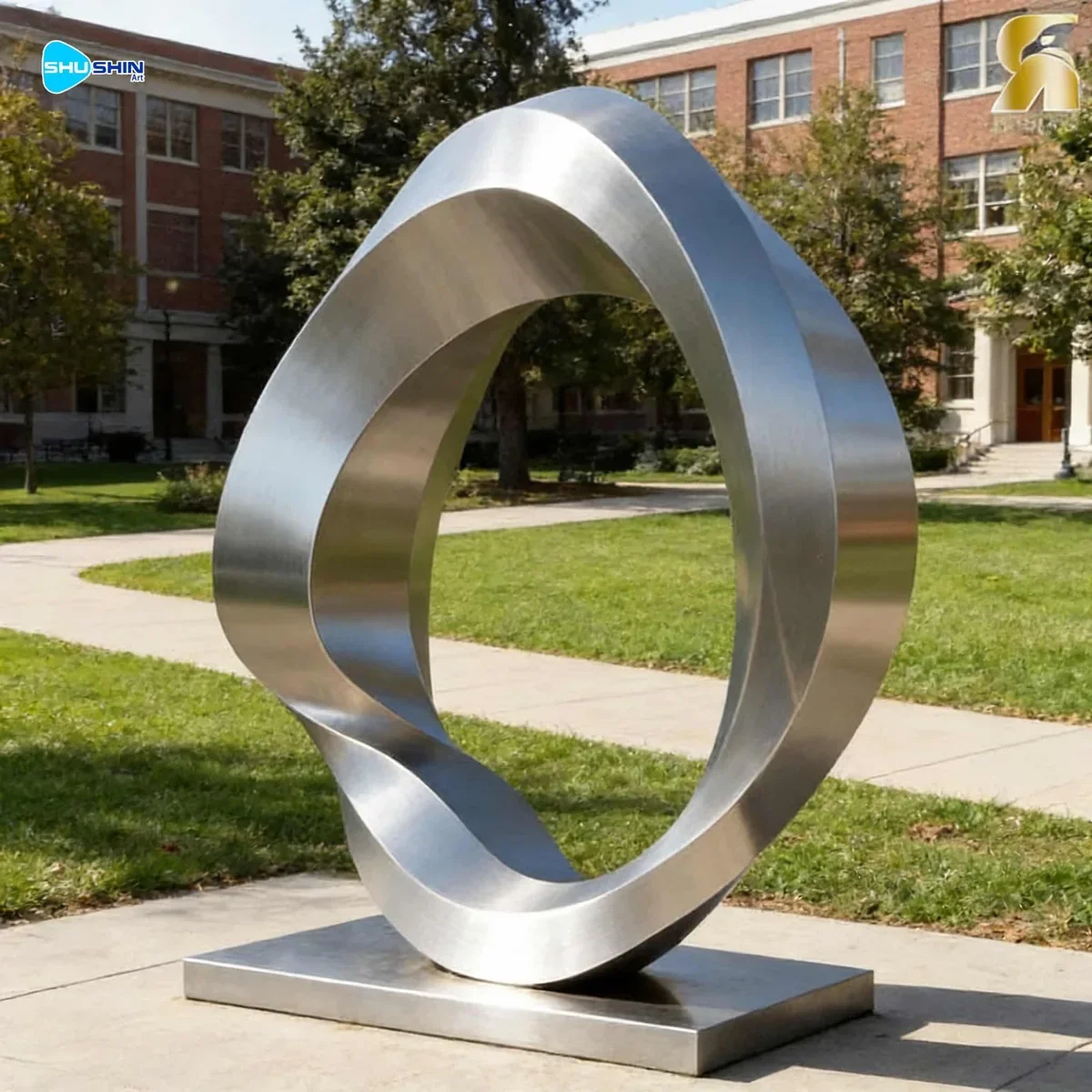
Mirror-polished stainless steel sculptures are often selected for modern parks, campuses, and commercial entrances.
Surface Finishing and Maintenance Planning
The surface of an outdoor sculpture is both an aesthetic and a protective layer. For stainless steel, the finish affects not only appearance but also corrosion resistance and cleaning frequency. Mirror finishes are visually striking but show fingerprints, dust, and water spotting. Brushed or satin finishes are more forgiving and are often selected for high-traffic or coastal environments.
For bronze, the patina is the primary visual identifier. It can be chemically accelerated to achieve a range of browns, greens, and blacks. Over time, the patina will continue to evolve based on the local environment. In some projects this is welcomed; in others, a protective coating may be applied to slow the change. The choice depends on the project intent and the maintenance expectations.
Another practical aspect is the coordination between the sculpture design and the site’s existing infrastructure. Lighting, irrigation, and drainage systems may need to be rerouted around the sculpture’s foundation or base. Addressing these interfaces during the design phase reduces the risk of costly site work later.
Factory Suggestion: When the sculpture will be installed in a coastal or high-humidity environment, it is worth discussing stainless steel grade, surface finish, and drainage paths during the design phase. Small details—such as how water sheds from horizontal surfaces, or how internal cavities are vented—can affect long-term maintenance more than the initial finish choice. These items are easier to address in fabrication than to correct after installation.
For marble and stone, surface finishing focuses on honed versus polished surfaces and on whether the stone will be sealed. A polished marble surface reads more formal and reflects light; a honed surface reads more matte and shows less etching from bird droppings or water runoff. The choice often comes down to the desired visual effect and the maintenance access the site allows.
Maintenance planning at the design stage also includes access strategy. For tall pieces, is there a safe way to reach the upper surfaces for cleaning? For pieces near water features, how will splashing affect the surface over time? These questions are not always answered in the first design meeting, but having them in view helps avoid costly revisions later.
Packaging, Transport, and Site Coordination
Large sculpture moves through several handoffs between factory and final site: crating, trucking, possible ocean or air freight, uncrating, temporary storage if the site is not ready, and final installation. Each handoff carries risk, and the packaging and logistics planning should be proportional to the sculpture’s fragility and value.
For large-scale projects, this large sculpture shipping and installation guide explains how delivery, site access, and installation planning should be coordinated before production is finalized.
For stainless steel pieces, the typical concerns are surface protection (preventing scratches or finger marks during handling) and structural protection (preventing deformation during transport). Custom crating with internal bracing is common for complex geometries. For bronze, the weight is the primary challenge; bronze is dense, and large pieces may require special permitting for road transport or special equipment for unloading.
Marble and stone pieces are vulnerable to impact and to uneven support during transport. Vacuum-lift systems are sometimes used for final placement to avoid sling marks or crushing at contact points. Discussing these handling methods during the quotation stage helps avoid surprises later, especially if the site has limited crane access or tight delivery windows.
Site coordination also includes delivery timing. In urban projects, unloading may be restricted to specific hours. In park projects, access roads may be closed seasonally or during events. These constraints are easier to accommodate in the fabrication schedule than to workaround during a fixed installation window.
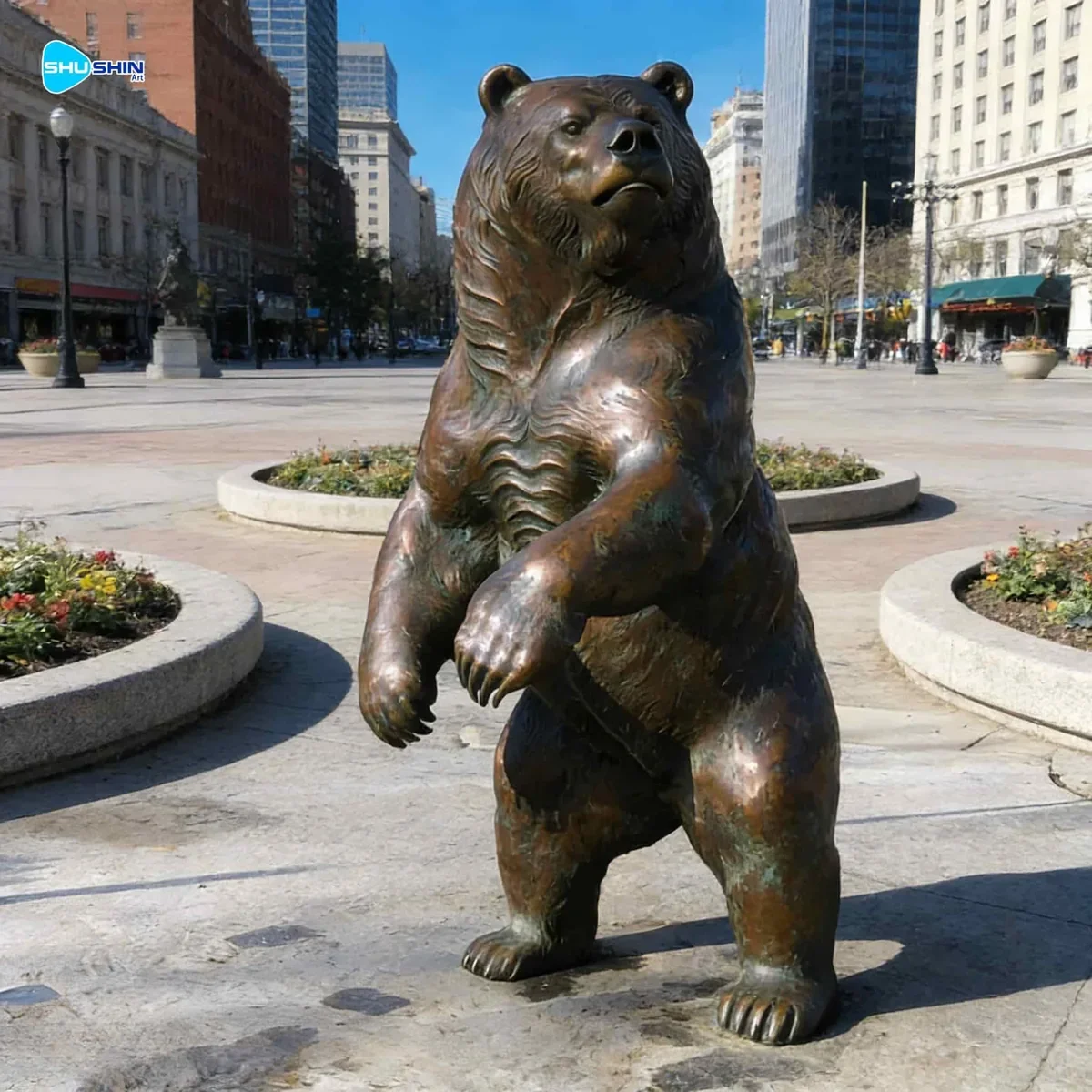
Bronze animal sculptures can make public spaces feel more approachable while still serving as durable outdoor artworks.
Preparing for the Quotation Process
Outdoor landscape sculpture projects tend to move more smoothly when the quotation request includes sufficient site and intent information. The following items are not always required at the first inquiry stage, but they help avoid extended back-and-forth later.
Site information: location, climate (coastal, urban, inland), and installation surface type. Photographs of the actual site are more useful than renderings at the early stage.
Approximate dimensions: height, width, and depth. For large pieces, indicating whether the dimensions are fixed or adjustable helps the fabrication team propose the most appropriate construction method.
Material and finish preference: stainless steel (mirror, brushed, bead-blasted), bronze (patina type or surface coating), or marble (sealer preference, if any).
Installation context: is the sculpture going into a new development, a renovation project, or an existing public space? Each context carries different coordination requirements.
Timeline and budget range: providing a project timeline and a rough budget range helps the fabrication team suggest approaches that are realistic within those parameters. For custom sculpture, fabrication methods and material choices affect both cost and lead time, and a transparent discussion early on reduces the risk of redesign later.
Maintenance expectations: clarifying how much maintenance the site can support over time helps guide material and finish selection. A piece that requires periodic cleaning or coating may not be the best fit for a site with limited maintenance access, and it is better to address this during material selection than after installation.
Foundation design should be confirmed by a qualified local engineer based on site conditions. Local building codes, setback requirements, and accessibility rules may also affect the sculpture’s final placement and anchorage method. Discussing these requirements early—and identifying who will be responsible for local permits and inspections—helps prevent delays during the installation phase.
A well-prepared quotation request typically includes a site plan or photographs, a concept drawing or reference images, approximate dimensions, material preferences, and any known site constraints (such as crane access, underground utilities, or pedestrian flow). The more relevant information is shared early, the more accurate the initial proposal can be.
Related Resources
For project teams evaluating materials and finishes, the following product categories outline options that are commonly used in outdoor landscape sculpture projects:
- Stainless Steel Sculpture – fabrication methods, finishes, and scale considerations for metal landscape pieces.
- Bronze Outdoor Landscape Sculpture – patination, casting alloys, and installation notes for bronze public art.
- Marble Garden Decorative Sculpture – stone selection, sealing, and outdoor durability for marble pieces.
- Custom Stainless Steel Sculptures – when the project requires a site-specific form, scale, or finish.
If the project involves a specific site constraint—limited crane access, coastal exposure, or a tight installation window—feel free to contact us with drawings or site photographs. The goal at the quotation stage is to identify the constraints early, when there is still room to adjust the approach without revisiting the entire design.