
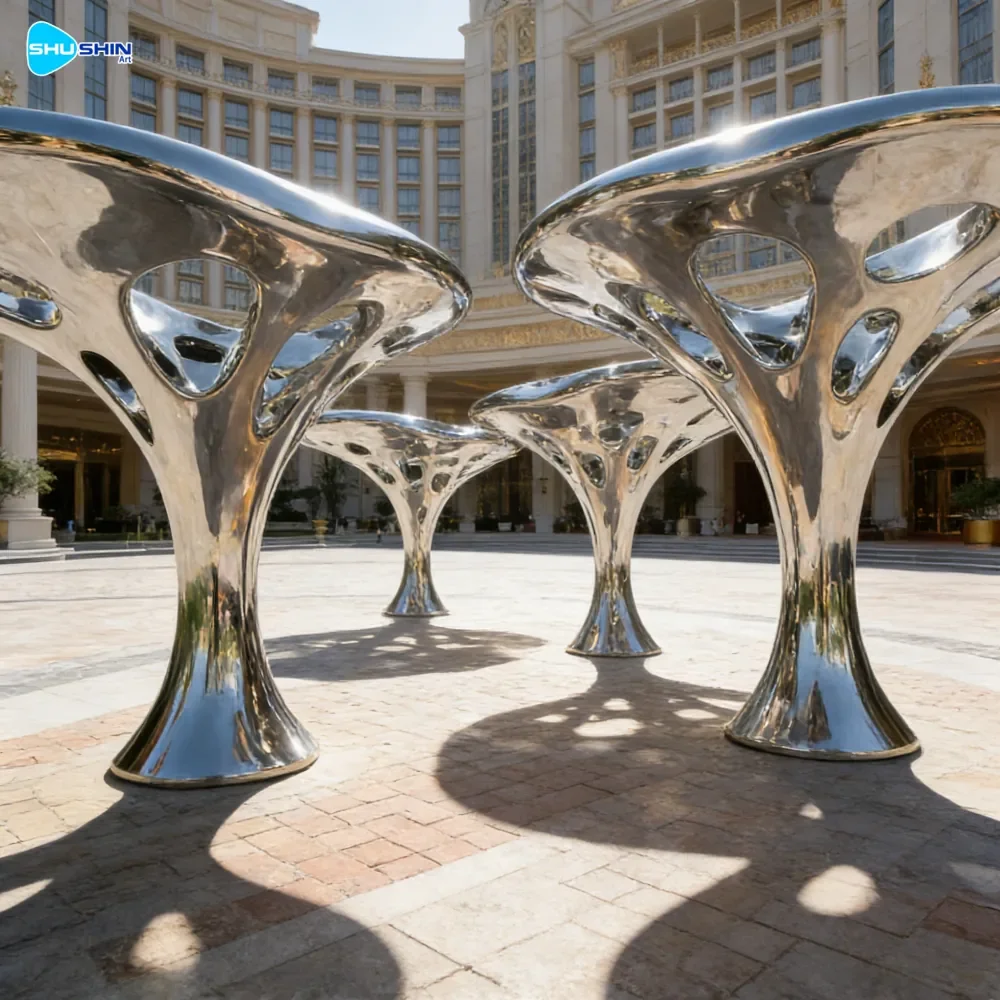
Planning a large outdoor sculpture for a hotel, garden, or public space is a multi-step process that begins long before a design is finalized or a manufacturer is selected. The decisions made during the early planning stage—location, scale, material, budget, and site conditions—determine whether the project runs smoothly or encounters avoidable delays and cost overruns. This guide explains what to prepare before requesting quotations, how to evaluate materials for outdoor use, what site information manufacturers need to provide accurate pricing, and which aspects of the project require local professionals rather than the sculpture supplier.
Why Planning Matters Before Ordering a Large Outdoor Sculpture
A large outdoor sculpture is not a catalog purchase. It is a custom project that involves design development, material selection, structural engineering, fabrication, shipping, and installation. Each of these steps depends on decisions made at the beginning of the project.
When planning starts late or key information is missing, two problems typically occur. First, the quotation process takes longer because the manufacturer needs to ask for clarifications. Second, the final cost may be higher than expected because site conditions were not accounted for during budgeting.
The planning process serves three purposes:
- Clarify the project intent — what the sculpture should accomplish in the space.
- Identify constraints early — size limitations, access restrictions, budget boundaries.
- Prepare a complete briefing package — so manufacturers can respond with accurate proposals rather than rough estimates.
For hotels and commercial projects, planning also involves coordination with other contractors. The sculpture may need to align with landscaping timelines, hardscape installation, or building completion dates. For public spaces, additional review cycles may be required. Starting the planning process early reduces the risk of conflicts later.
Define the Project Purpose and Location
The first step in planning an outdoor sculpture is defining where it will be installed and what role it should play in that location.
Project Purpose
Sculptures serve different purposes depending on the setting:
- Hotels and resorts — often use sculpture as a visual anchor for entrance areas, lobby courtyards, pool decks, or garden paths. The goal is usually to create a memorable impression for guests.
- Private gardens — typically focus on personal enjoyment, spatial definition, or complementing landscaping.
- Commercial developments — may use sculpture as a wayfinding element, a branding asset, or a public art contribution.
- Public spaces — require consideration of durability, safety, maintenance access, and community context.
Defining the purpose helps narrow down style, scale, and material choices. A sculpture intended as a hotel entrance landmark has different requirements than a garden sculpture meant to be discovered along a walking path.
Location Selection
The installation location affects nearly every subsequent decision. Consider the following:
- Visibility — Will the sculpture be viewed from a distance, or primarily up close?
- Viewing angles — Are there sightlines from entrances, windows, or pathways?
- Lighting — Is the location naturally lit during the day? Is artificial lighting available or planned for evening viewing?
- Pedestrian flow — Will people walk around the sculpture, or view it from a fixed point?
- Safety and security — Is the location accessible to the public? Does it need to withstand contact, weather, or potential vandalism?
For hotels, the most common locations are entrance plazas, central courtyards, pool areas, and garden walkways. Each has different considerations. An entrance plaza sculpture needs to be visible from arriving vehicles and stable under outdoor conditions. A garden sculpture can be more delicate but must withstand soil moisture and temperature changes.
Document the location with photographs taken from multiple angles, including approaching sightlines. These photographs become part of the briefing package when requesting quotations.
For broader placement ideas in landscape and public art settings, see our outdoor landscape sculpture guide.
Choose the Right Visual Scale and Sculpture Size
Scale is one of the most common planning mistakes. A sculpture that looks impressive in a showroom or in photographs may appear too small in a large outdoor space, or too overwhelming in a confined garden.
How to Evaluate Scale
Scale is not just about height. It is about the relationship between the sculpture and its surroundings.
- Horizontal space — How much ground area is available? Is the sculpture the only element in the space, or will it share the area with plantings, seating, or water features?
- Vertical proportion — A two-meter sculpture may be appropriate for a garden setting but lost in a large hotel plaza.
- Viewing distance — Sculptures viewed from 20 meters away need more visual presence than those viewed from 3 meters.
A practical approach is to use temporary markers on-site. Cones, flagpoles, or even tall plants can help visualize the approximate size before ordering. Some manufacturers can provide scale drawings or digital renderings that show the sculpture in the actual location.
Size Planning and Budget
Size directly affects cost. Larger sculptures require more material, longer fabrication time, stronger crating for shipping, and often larger cranes for installation. Planning the size early allows for more accurate budgeting.
There is no single “correct” size. The right scale depends on the space and the project intent. A tall, narrow sculpture may be appropriate for a building entrance where horizontal space is limited. A wider, lower sculpture may work better in a garden where visitors walk around it.
When discussing size with manufacturers, provide both the desired dimensions and the acceptable range. For example: “We are planning a sculpture approximately 2 meters tall. A range of 1.8 to 2.3 meters is acceptable depending on the design.”
Compare Outdoor Sculpture Materials
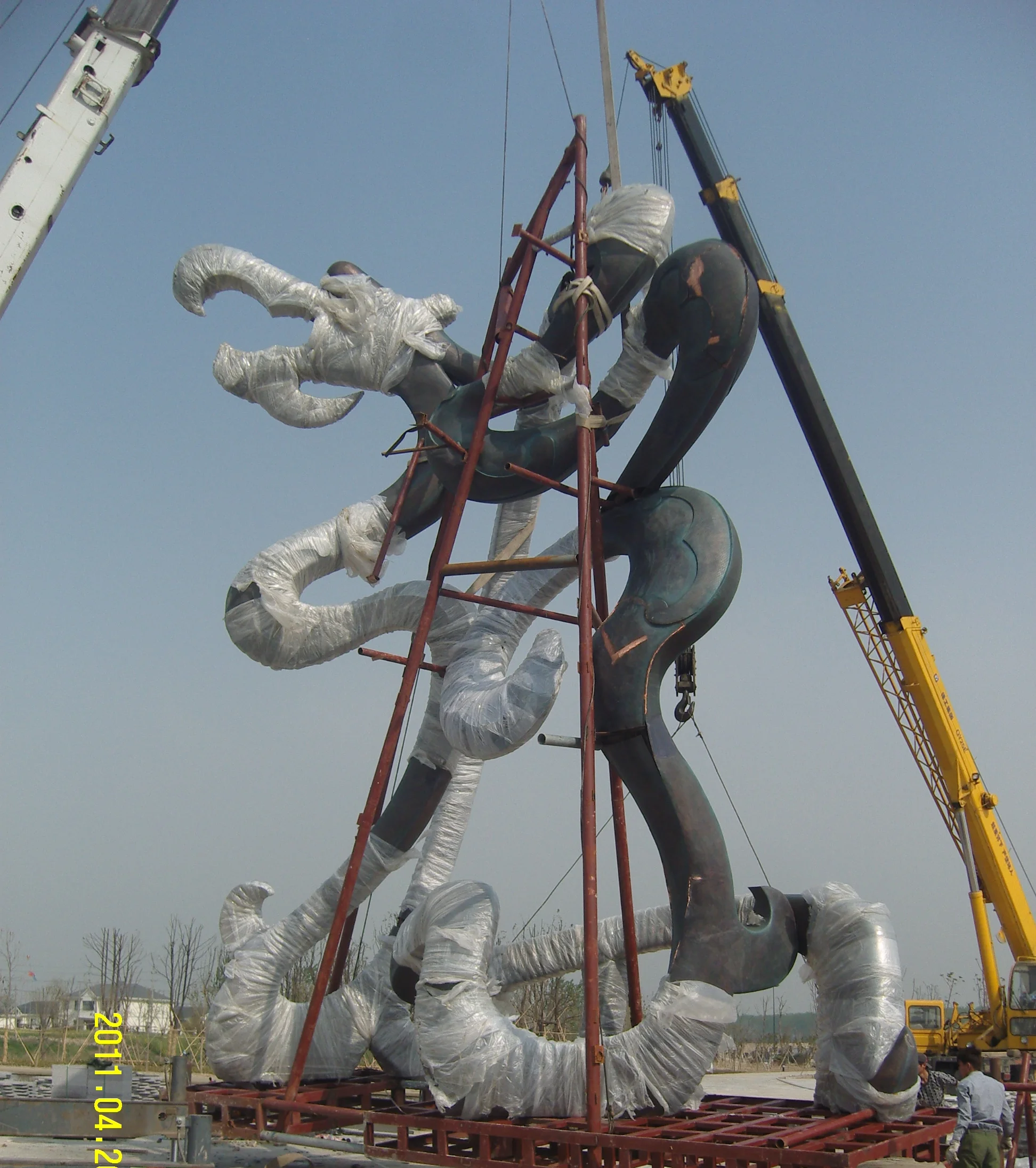
Material selection is a balance between appearance, durability, maintenance, and cost. Each material has specific characteristics that make it suitable for certain outdoor applications and less suitable for others.
The following comparison is intended to help you narrow down material choices during the planning phase. For detailed guidance on specific materials, see our dedicated guides on stainless steel sculpture cost, garden sculpture selection, and custom bronze sculpture.
Stainless Steel
Stainless steel is widely used for large outdoor sculptures because of its weather resistance and modern appearance.
Advantages:
- Resists rust and corrosion in most outdoor environments.
- Can be finished in multiple ways: mirror polish, brushed, matte, or colored coating.
- Suitable for coastal areas when using marine-grade stainless steel (316L).
- Can be fabricated in large sizes without excessive weight.
Considerations:
- Mirror polish shows fingerprints and dust; it requires occasional cleaning depending on the environment.
- In very hot climates, sun-heated stainless steel surfaces can become too hot to touch.
- Welding and surface finishing quality vary significantly between manufacturers.
Stainless steel is a common choice for hotels and commercial developments because it maintains a consistent appearance with minimal maintenance.
Bronze
Bronze has been used for outdoor sculpture for centuries. It develops a patina over time that many clients find desirable.
Advantages:
- Extremely durable; bronze sculptures have survived outdoors for hundreds of years.
- Patina development is natural and does not compromise structural integrity.
- Suitable for detailed figurative work.
- Accepts a wide range of surface finishes, from polished to heavily patinated.
Considerations:
- Heavier than stainless steel for the same volume.
- More expensive per kilogram than stainless steel.
- Patina color changes over time and cannot be precisely controlled.
- Requires a foundry process (casting), which takes longer than fabrication.
Bronze is often chosen for projects where tradition, permanence, or detailed artistry are priorities.
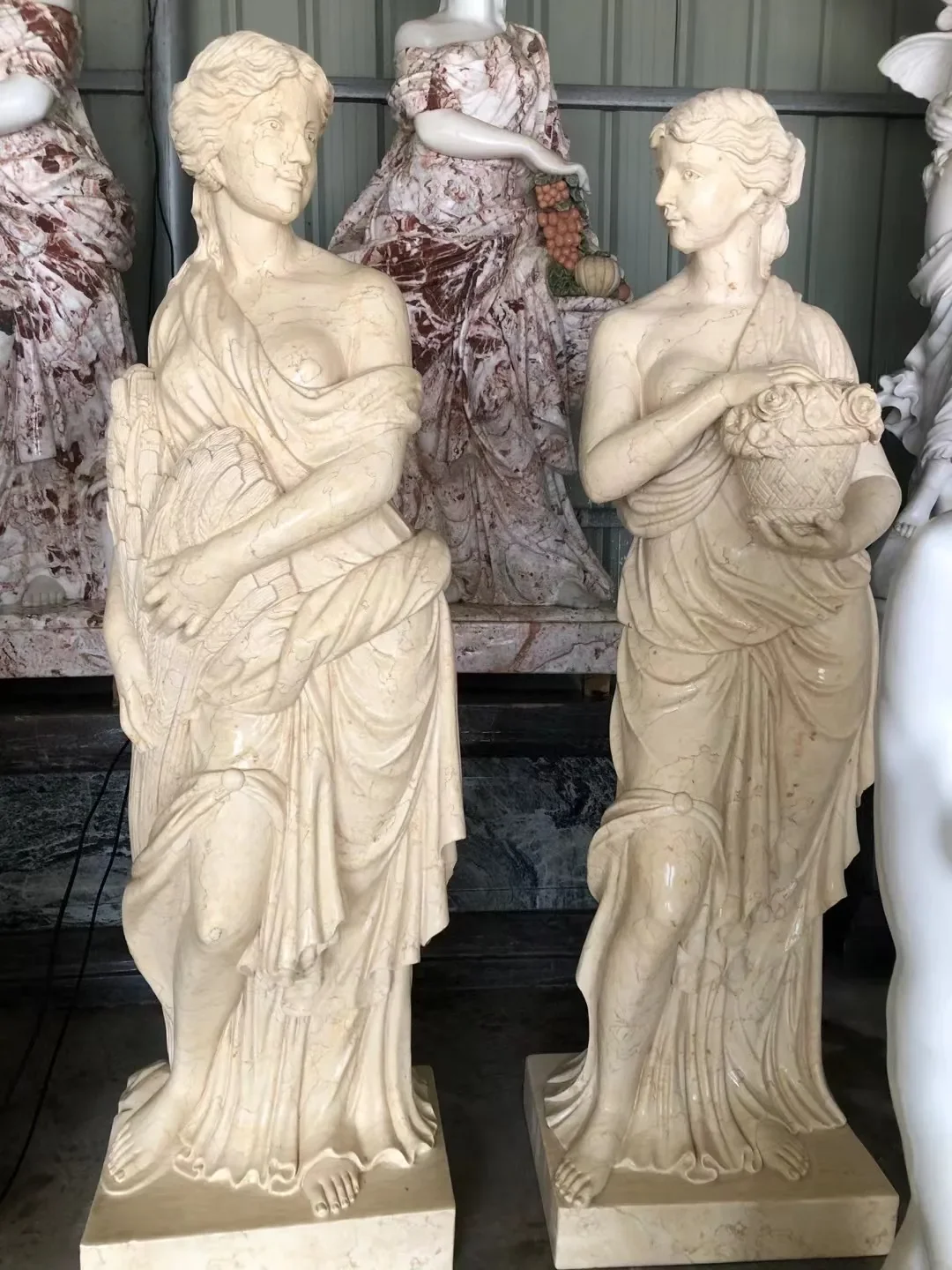
Marble and Stone
Marble and natural stone sculptures have a classic appearance and substantial presence.
Advantages:
- Each piece is unique because of natural stone variation.
- Does not rust, fade, or develop patina.
- Suitable for both traditional and contemporary designs.
- Can be left outdoors indefinitely in most climates.
Considerations:
- Heavy; installation requires proper foundation and lifting equipment.
- Softer stones (some marbles) can be affected by acid rain over long periods.
- Repairs are difficult if the stone cracks.
- Limited to carved forms or assembled blocks; not suitable for thin, projecting elements in freeze-thaw climates.
Marble is frequently used in gardens, courtyards, and hotel landscapes where a natural material appearance is desired.
Fiberglass and FRP (Fiberglass Reinforced Plastic)
Fiberglass sculptures are lighter and less expensive than metal or stone, but they have different durability characteristics.
Advantages:
- Lightweight; easier and less expensive to ship and install.
- Can be molded into complex shapes.
- Surface can be finished to simulate other materials.
- Lower material cost than bronze or stone.
Considerations:
- Not as durable as metal or stone in harsh outdoor conditions.
- UV exposure can degrade the surface over time if not properly coated.
- Not suitable for load-bearing or structural applications.
- Repair is possible but may be visible.
Fiberglass is sometimes used for temporary installations, indoor-outdoor transitional spaces, or projects with limited budgets.
Material Selection Summary
| Material | Durability | Maintenance | Cost | Best For |
|---|---|---|---|---|
| Stainless Steel | High | Low | Medium-High | Modern hotels, public spaces |
| Bronze | Very High | Low | High | Figurative work, traditional settings |
| Marble/Stone | High | Low-Medium | Medium-High | Gardens, classical architecture |
| Fiberglass/FRP | Medium | Medium | Low-Medium | Temporary installations, budget projects |
The choice depends on the project location, expected lifespan, maintenance access, and budget.
Plan Budget, Design Scope, and Customization Level
Budget planning for a large outdoor sculpture involves more than the sculpture price. The total project cost typically includes design, fabrication, shipping, crating, insurance, and installation.
Budget Components
- Design development — Some manufacturers include basic design in the quotation. Custom design work, revisions, and engineering drawings may be billed separately.
- Fabrication or carving — The largest cost component, based on material, size, complexity, and quantity.
- Surface finishing — Polishing, patina application, coating, or other finishes.
- Crating and packaging — Export crating for international shipping.
- Shipping — Ocean freight, trucking, or air freight depending on urgency and budget.
- Insurance — Transit insurance, if requested, is usually quoted separately and may depend on the shipment value, route, and carrier.
- Installation — Crane rental, labor, foundation work, and any local contractors required.
When planning budget, ask manufacturers to itemize these components separately. A lump-sum quotation makes it difficult to compare offers or identify cost-saving opportunities.
Design Scope
The level of design customization affects both cost and timeline.
- Existing design with modifications — The most efficient approach. The manufacturer has already developed the design; the client requests size, finish, or detail changes.
- Semi-custom design — The manufacturer provides concept options based on the client’s brief, and one is developed further.
- Fully custom design — The sculpture is designed from scratch based on the client’s specifications, reference images, or collaboration with an artist.
For hotels and commercial projects, semi-custom is often the most practical balance between uniqueness and cost control.
Customization Level and Timeline
More customization requires more time. A modified existing design may be ready for production within 2–3 weeks of design confirmation. A fully custom design may require 4–8 weeks for design development, client feedback, and finalization before production begins.
When planning timeline, account for design time separately from production time.
Check Site Access and Installation Conditions
Site access affects both the sculpture design and the installation method. This section explains what to check before finalizing the order, without duplicating the detailed installation guidance covered in our large sculpture shipping and installation guide.
What to Check
- Delivery vehicle access — Can a truck reach the site? If not, is there a transfer point where a smaller vehicle can take over?
- Path width and height clearance — The sculpture crate has dimensions. Measure gate widths, corridor heights, and any overhead obstructions.
- Ground conditions — Can a crane or forklift operate at the delivery point? Soft ground may require temporary reinforcement.
- Available lifting equipment — Does the site have a forklift, or will one need to be rented? What is the lifting capacity?
- Installation surface — Will the sculpture sit on grass, concrete, decking, or another surface? Each requires different preparation.
- Electrical access — If the sculpture includes lighting or if installation will occur in low-light conditions, is power available?
Why This Matters for Planning
Knowing site access limitations early allows the manufacturer to design the sculpture accordingly. Large sculptures can sometimes be fabricated in sections that are assembled on-site, reducing the size of the largest individual piece. This is particularly relevant for indoor deliveries or sites with restricted access.
For hotels and commercial projects, coordinate with the facility management team. They can provide site drawings, identify access constraints, and advise on scheduling to avoid disrupting guests or operations.
More detailed guidance on shipping and installation preparation is available in a separate guide. The key point for planning purposes is to identify constraints early so they can be addressed during the design and production phases rather than discovered on delivery day.
Prepare the Information Needed for an Accurate Quotation
A complete briefing package allows manufacturers to provide accurate quotations rather than rough estimates. Incomplete information leads to back-and-forth communication and potential misunderstandings about what is included.
Essential Information for Quotation
At minimum, manufacturers need the following information to provide a meaningful quotation:
- Project location (city and country) — Affects shipping estimates and, in some cases, material recommendations based on climate.
- Indoor or outdoor — Outdoor installations require different material preparations and finishes.
- Approximate size — Height, width, and depth. If the exact size is not yet determined, provide the target range.
- Material preference — Stainless steel, bronze, marble, fiberglass, or a combination.
- Installation location description — Brief description of where the sculpture will be placed, including surface type and surrounding elements.
Without these basics, any quotation will be speculative and may change significantly once more information becomes available.
Helpful Information for a More Accurate Quotation
The following information is not always available in the early planning stage, but providing it when possible leads to more precise pricing:
- Reference images — Photographs or drawings that show the desired style, form, or mood. These are for communication, not necessarily for copying.
- Site photographs — Images of the installation area from multiple angles. These help manufacturers assess access conditions and scale.
- Delivery address or nearest port — Needed for shipping cost estimation. International projects should specify the nearest major port (e.g., “Los Angeles Port” or “Rotterdam Port”).
- Forklift or crane availability at site — Affects installation planning and crating design.
- Preferred timeline — When the project needs to be completed. Include any fixed dates (hotel opening, event, season).
- Surface finish preference — Polished, brushed, patinated, natural, or other.
- Quantity — One sculpture or multiple.
- Budget range (if available) — Helps the manufacturer propose appropriate materials and design approaches.
This information can be provided gradually. Many clients start with the essential items and add the helpful items as the project definition becomes clearer.
What a Good Quotation Should Include
A detailed quotation should list:
- Design development scope and fees (if any)
- Fabrication or carving cost
- Material specifications
- Surface finish
- Estimated production time
- Crating and packaging method
- Shipping terms (such as EXW, FOB, CIF, or DAP, depending on the project scope and destination)
- Payment terms
- What is not included (installation, foundation, local permits, etc.)
If any of these are missing, ask for clarification before proceeding.
Common Planning Mistakes to Avoid
Several planning mistakes occur frequently enough to be worth highlighting.
Mistake 1: Deciding on Size Without Site Context
Ordering a sculpture based on a number (“Make it 2 meters tall”) without considering the installation site often leads to scale problems. Always evaluate size in the context of the actual location, even if only through photographs or site visits.
Mistake 2: Underestimating Foundation Requirements
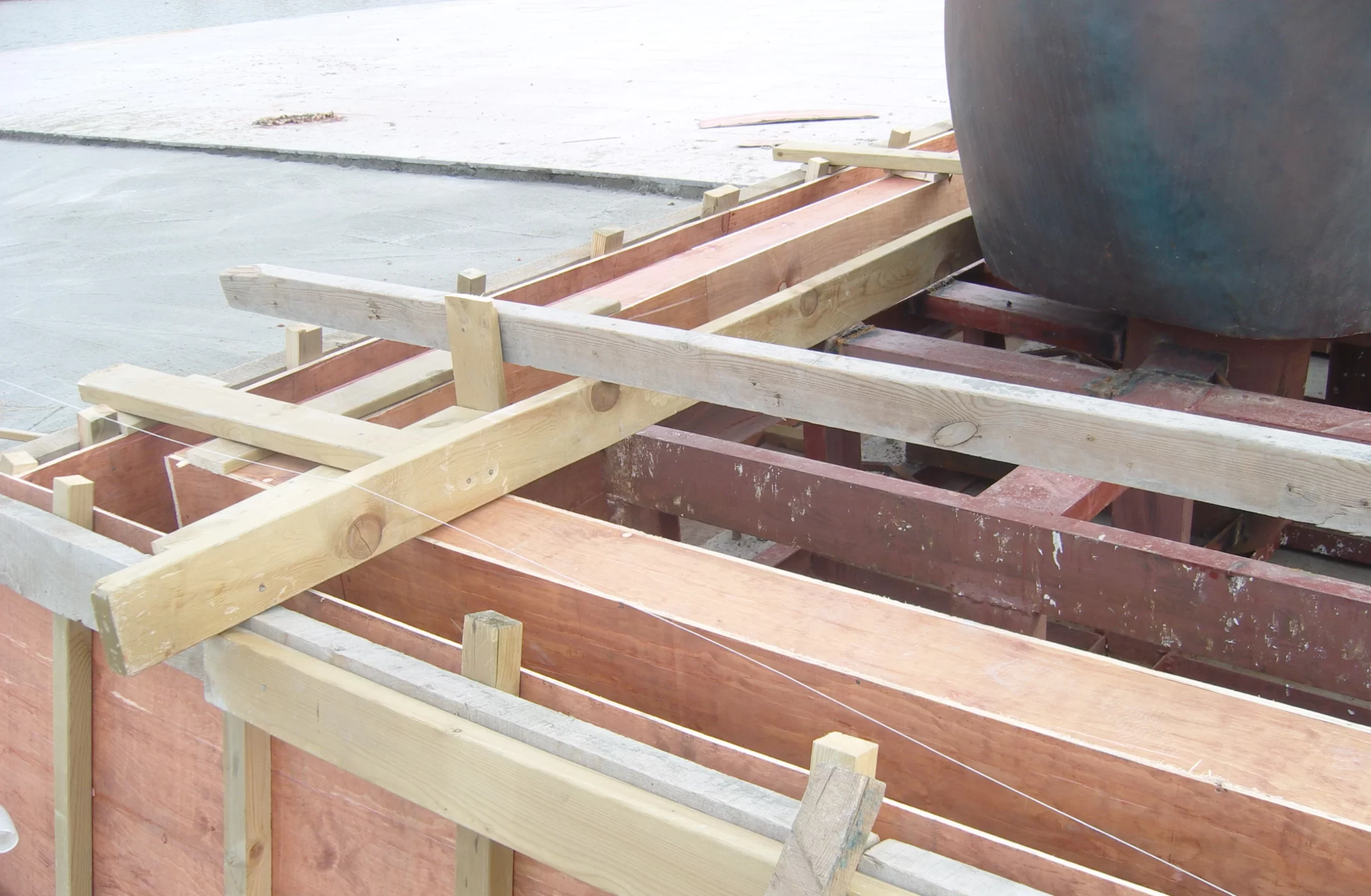
Large outdoor sculptures need proper support. A heavy marble sculpture on soft ground will settle or tilt over time. The foundation design depends on the sculpture weight, the base area, and the soil conditions. Foundation work is typically done by local contractors, not by the sculpture manufacturer, but the manufacturer should provide the weight and base dimension information that local contractors need.
Mistake 3: Confusing Material Appearance With Durability
A material may look appropriate in a showroom but behave differently outdoors. Polished stainless steel in a dusty environment requires more cleaning. Dark bronze patina in a coastal area may develop differently than expected. Ask manufacturers for examples of their work in similar climates.
Mistake 4: Treating Installation as an Afterthought
Installation is not automatically included in the sculpture price. Some manufacturers provide installation guidance; others provide on-site supervision; others leave it entirely to the client. Clarify this early so it can be budgeted and scheduled.
Mistake 5: Overlooking Local Regulations
Outdoor sculptures in public spaces or commercial properties may be subject to permits, safety inspections, or design review boards. These requirements vary by location and are the responsibility of the project owner, not the sculpture manufacturer. Check with local authorities early in the planning process.
Mistake 6: Requesting Quotations Without Enough Information
Manufacturers cannot provide accurate pricing without basic information about size, material, and location. Sending the same brief drawing to multiple manufacturers and expecting comparable quotations rarely works because each manufacturer will make different assumptions.
How a Sculpture Manufacturer Supports the Planning Process
Understanding what a manufacturer can and cannot do helps set realistic expectations and avoids misunderstandings.
What Manufacturers Typically Provide
- Material and process recommendations based on the project location and intended lifespan.
- Scale drawings or digital renderings to help visualize the sculpture in the intended location.
- Production timelines based on current workshop capacity and the complexity of the project.
- Crating and shipping coordination including export documentation for international projects.
- Installation guidance in the form of drawings, specifications, or on-site supervision (depending on the manufacturer and the project).
- Maintenance recommendations for the chosen material and finish.
What Manufacturers Typically Do Not Provide
- Local permits or regulatory approvals — These are the responsibility of the project owner and are handled by local professionals.
- Foundation design or engineering stamps — While manufacturers can provide sculpture weight and base dimensions, foundation design must be done by local engineers who understand soil conditions and building codes.
- Local installation labor — Manufacturers may supervise or provide guidance, but the actual installation crew is usually local.
- Long-term maintenance contracts — Some manufacturers offer maintenance guidance; ongoing maintenance is typically arranged locally.
The most productive manufacturer-client relationships are those where responsibilities are clearly defined early. The manufacturer’s role is to produce and deliver the sculpture. Site preparation, permits, foundation work, and installation labor are typically local responsibilities.
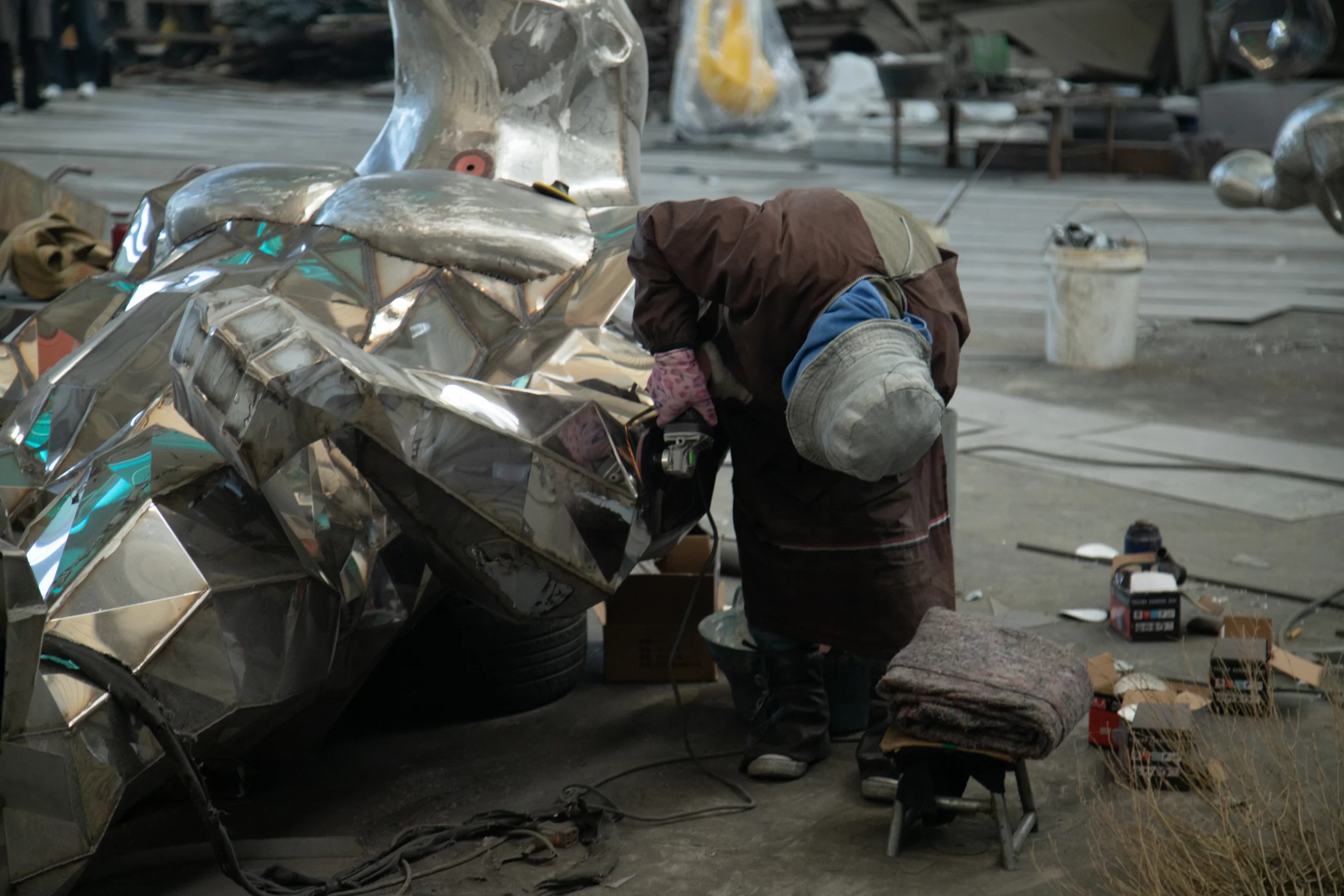
Outdoor Sculpture Planning Checklist
Use this checklist during the planning process. It is not necessary to complete every item before contacting a manufacturer, but having the information available makes the consultation more productive.
Project Definition
- Installation location identified (hotel, garden, public space, other)
- Purpose of the sculpture defined (landmark, focal point, complementary element)
- Approximate size range determined
- Material preference identified (or open to recommendations)
- Budget range estimated
Site Information
- Site photographs taken from multiple angles
- Approximate installation area measured
- Ground surface type noted (grass, concrete, decking, other)
- Access route for delivery checked (truck, forklift, crane access)
- Local contractor identified for foundation work (if needed)
Design and Quotation
- Reference images collected
- Preferred timeline established
- Manufacturers contacted with project brief
- Quotations received and compared (itemized, not lump sum)
- Material and finish options discussed
Pre-Production
- Design confirmed (existing design modified, semi-custom, or fully custom)
- Production timeline confirmed
- Shipping terms and costs confirmed
- Installation method discussed and planned
- Foundation specifications received from manufacturer and given to local contractor
Before Delivery
- Site prepared (foundation completed, access confirmed)
- Delivery appointment scheduled
- Installation equipment confirmed (forklift, crane, or other)
- Local installation team coordinated
This checklist is a planning tool, not a strict sequence. Some items happen in parallel. The value is in making sure nothing is overlooked.
FAQ
How early should I start planning a large outdoor sculpture?
For a custom sculpture, start planning at least 3–6 months before the desired installation date. This allows time for design development, material selection, production, shipping, and installation coordination. For hotels with fixed opening dates, start earlier—6–9 months—because the sculpture may need to align with other construction or landscaping timelines.
Do I need a foundation for an outdoor sculpture?
Most large outdoor sculptures need some form of foundation or base preparation. The type of foundation depends on the sculpture weight, the base design, and the ground conditions. Small garden sculptures may sit on a prepared gravel or concrete pad. Larger sculptures may require a reinforced concrete foundation. The manufacturer should provide the weight and base dimension specifications; a local contractor or engineer designs and installs the foundation.
Can I install the sculpture myself?
Small sculptures (under 50 kg) can often be installed by the client or a general contractor. Larger sculptures require lifting equipment and, in many cases, professional installation supervision. The risk is not only to the sculpture but also to personnel and property. If the sculpture value or the installation complexity is significant, use professional installers.
How do I maintain an outdoor sculpture?
Maintenance depends on the material. Stainless steel may need occasional cleaning to remove dust or fingerprints. Bronze patina is low maintenance but can be cleaned or waxed periodically. Marble may need sealing depending on the stone type and the climate. Fiberglass surfaces may need coating renewal every several years. Ask the manufacturer for material-specific maintenance guidance.
Can the sculpture be modified after it is installed?
Some modifications are possible, but they are more difficult and expensive after installation. Surface finish changes (such as re-polishing stainless steel or re-applying bronze patina) can sometimes be done on-site. Structural modifications are rarely practical. It is better to finalize the design and finish before production begins.
Does the manufacturer handle permits for outdoor sculpture installation?
No. Permits and regulatory approvals are the responsibility of the project owner. Requirements vary by location and by project type. A sculpture installed on private hotel property may not require a permit; a sculpture in a public space almost certainly will. Check with local authorities during the planning phase.
How much does a large outdoor sculpture cost?
Cost varies widely based on material, size, complexity, and quantity. Small garden sculptures may cost a few thousand dollars. Large custom sculptures for hotels or public spaces can range from tens of thousands to hundreds of thousands of dollars. The most accurate way to determine cost is to prepare a project brief and request itemized quotations from manufacturers.
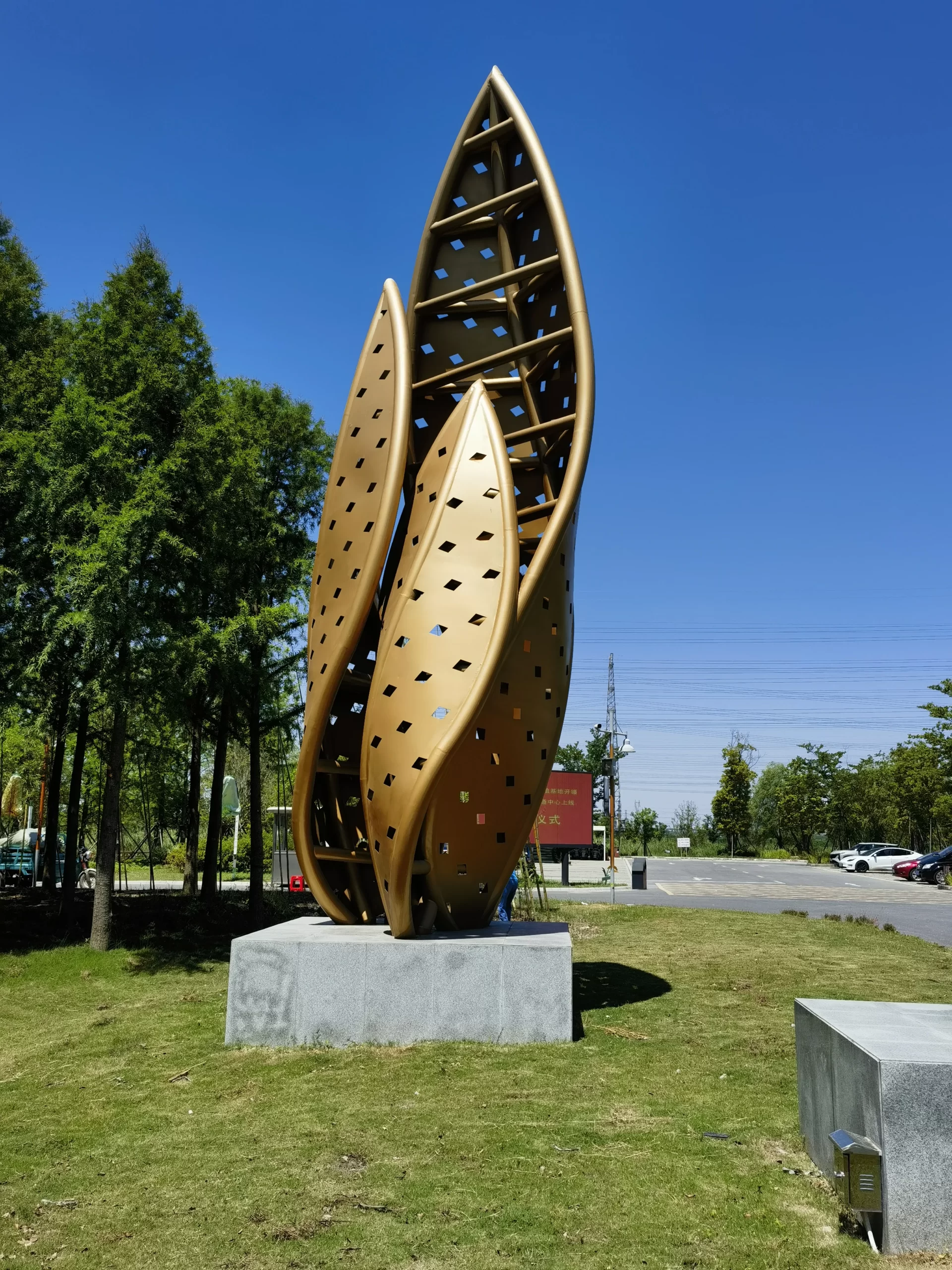
Start Your Outdoor Sculpture Project
Planning a large outdoor sculpture is a process of progressively refining decisions—from location and purpose, to material and size, to design and budget. The more information prepared before requesting quotations, the more accurate and comparable the responses will be.
If you are in the early planning stage, start by documenting the installation location with photographs and approximate measurements. Identify the purpose of the sculpture in the space. Note any known constraints such as access limitations, budget boundaries, or fixed completion dates.
This information forms the basis of a project brief that can be used to consult with sculpture manufacturers. The consultation is an opportunity to discuss material options, design approaches, production timelines, and budget ranges.
Shushin Art has worked with hotels, landscapers, developers, and public space projects to plan and manufacture large outdoor sculptures. The manufacturing process draws on 50+ years of sculpture craftsmanship and production experience. The role is to provide the sculpture itself—made for outdoor conditions according to the agreed material, structure, and finish requirements, fabricated or carved to specification, crated for safe transport, and delivered to the project site.
To begin a consultation, contact Shushin Art and prepare the following if available:
- Project location (city and country)
- Sculpture size (approximate height, width, depth, or target range)
- Preferred material (stainless steel, bronze, marble, fiberglass, or combination)
- Reference images (style, form, or mood)
- Site photographs (multiple angles of installation area)
- Delivery address or nearest port
- Expected timeline (completion date or preferred season)
This information allows for a more specific discussion about material suitability, design options, and production scheduling.