
Why Choose Bronze for a Custom Sculpture Project?
Bronze has been the material of choice for monumental sculpture for over 5,000 years, and there are practical reasons for that longevity. Unlike stone, which is carved by removing material, or stainless steel, which is fabricated from sheet or cast components, bronze is cast—meaning the artist can achieve fine detail, undercuts, and complex compositions that other materials simply cannot replicate at the same cost threshold.
For outdoor projects, bronze develops a stable patina that actually protects the metal underneath. A properly alloyed silicon bronze or phosphor bronze sculpture can remain structurally sound for centuries, even in coastal or freeze-thaw environments. That’s why 19th-century bronze statues in European public squares still look fundamentally sound today.
From a project planning perspective, bronze also offers something less tangible but equally important: it *feels* permanent. Clients installing a sculpture for a hotel entrance, a church courtyard, or a municipal plaza are often making a multi-decade investment. Bronze communicates that timeframe to anyone looking at it.
Bronze vs. Stainless Steel, Marble, and Fiberglass
We work with all of these materials at Shushin Art, and each has its place. The key is matching material to project intent, not defaulting to whatever is cheapest or most familiar.
| Material | Best For | Limitations | Typical Patina |
|---|---|---|---|
| Bronze | Figurative work, religious sculpture, public monuments | Higher cost, longer lead time | Rich greens, browns, blacks |
| 316L Stainless Steel | Abstract forms, mirrors, modern corporate installations | Less detail resolution, reflective surface shows fingerprints | Mirror or satin only |
| Marble | Classical figures, architectural integration | Brittle in freeze-thaw, heavy, limited to carved forms | N/A—polished or honed stone |
| Fiberglass (FRP) | Temporary installations, budget-sensitive projects, prototypes | UV degradation outdoors, not structural for large scale | Painted finish only |
If you’re evaluating stainless steel sculpture cost and pricing, the short version is: stainless is often less expensive for large abstract forms, but bronze wins on detail and long-term patina development. For religious sculptures in sacred spaces, bronze is traditionally preferred because of its historical association with liturgical art and its ability to hold fine facial detail over large format.
Common Types of Bronze Sculptures
We work with clients on a wide range of bronze sculpture project types. The most common categories we see today are:
Figurative Monuments — Life-size or larger human figures, often commissioned by municipalities or educational institutions. These require the most attention to anatomy and proportion, because the public views them at eye level.
Religious and Memorial Sculptures — Saints, angels, historical figures, and commemorative monuments. These projects often have strong constraints around iconography and symbolic elements that need to be researched carefully before modeling begins.
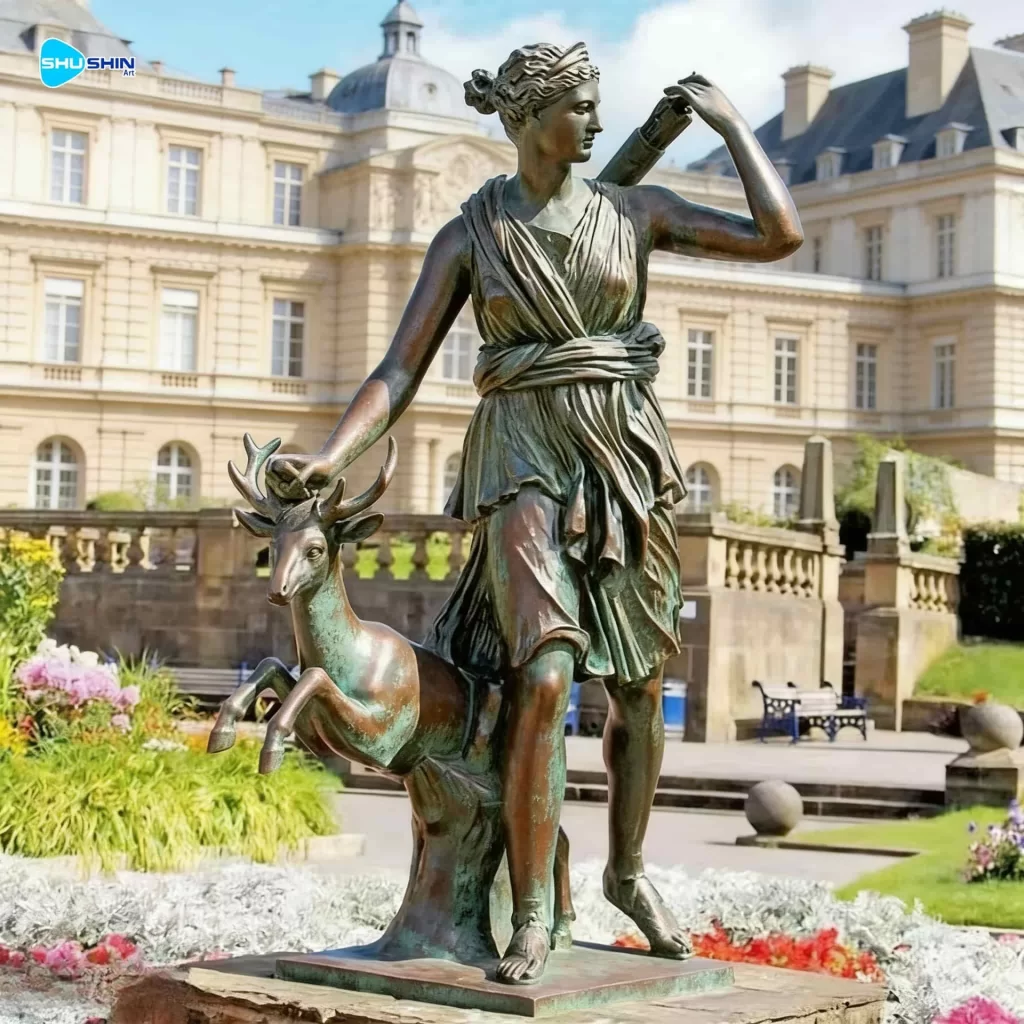
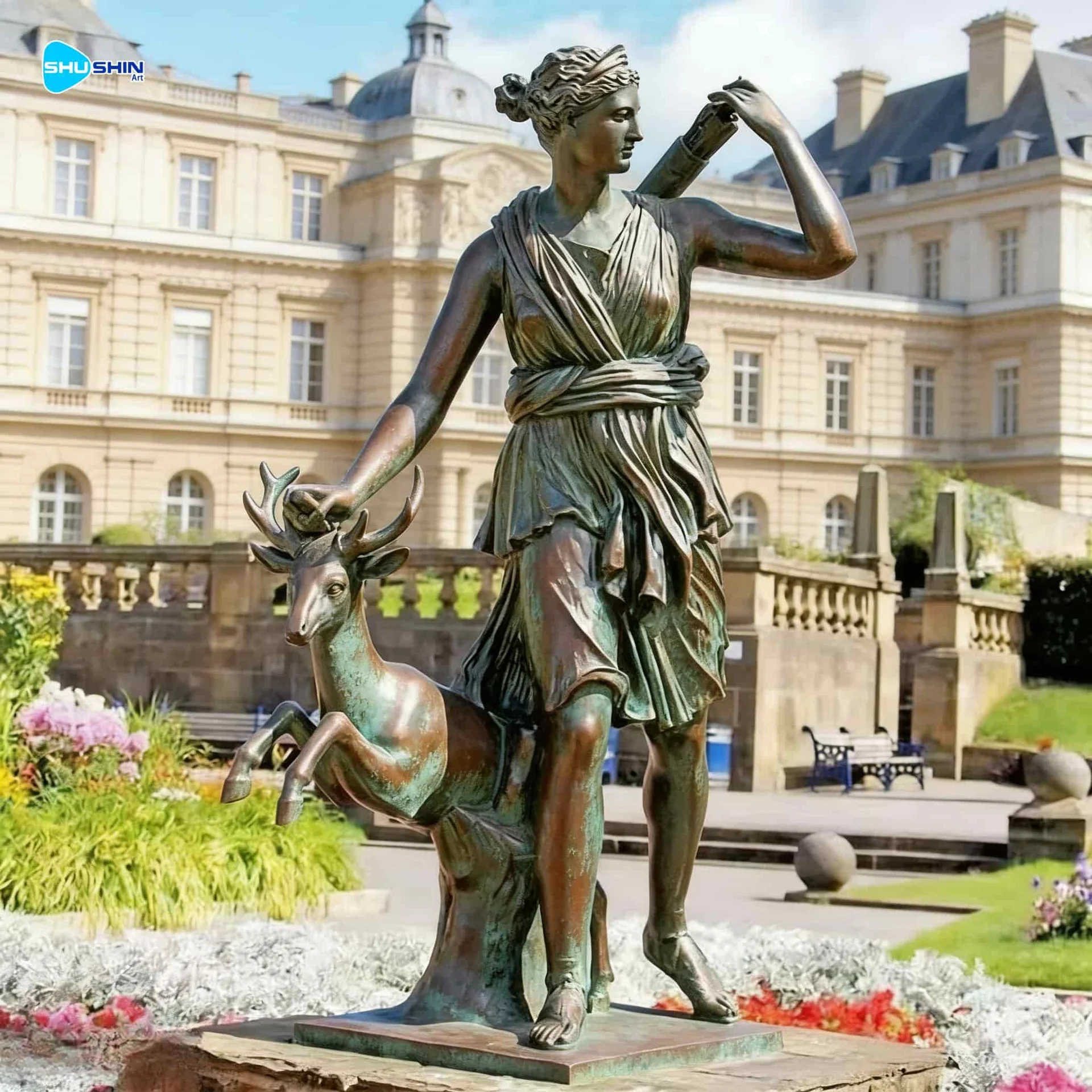
Garden and Estate Sculptures — Smaller in scale (typically 1–2 meters), often allegorical figures, animals, or abstract forms intended for garden sculpture placement. These benefit from bronze’s ability to develop a living patina that complements planting schemes.
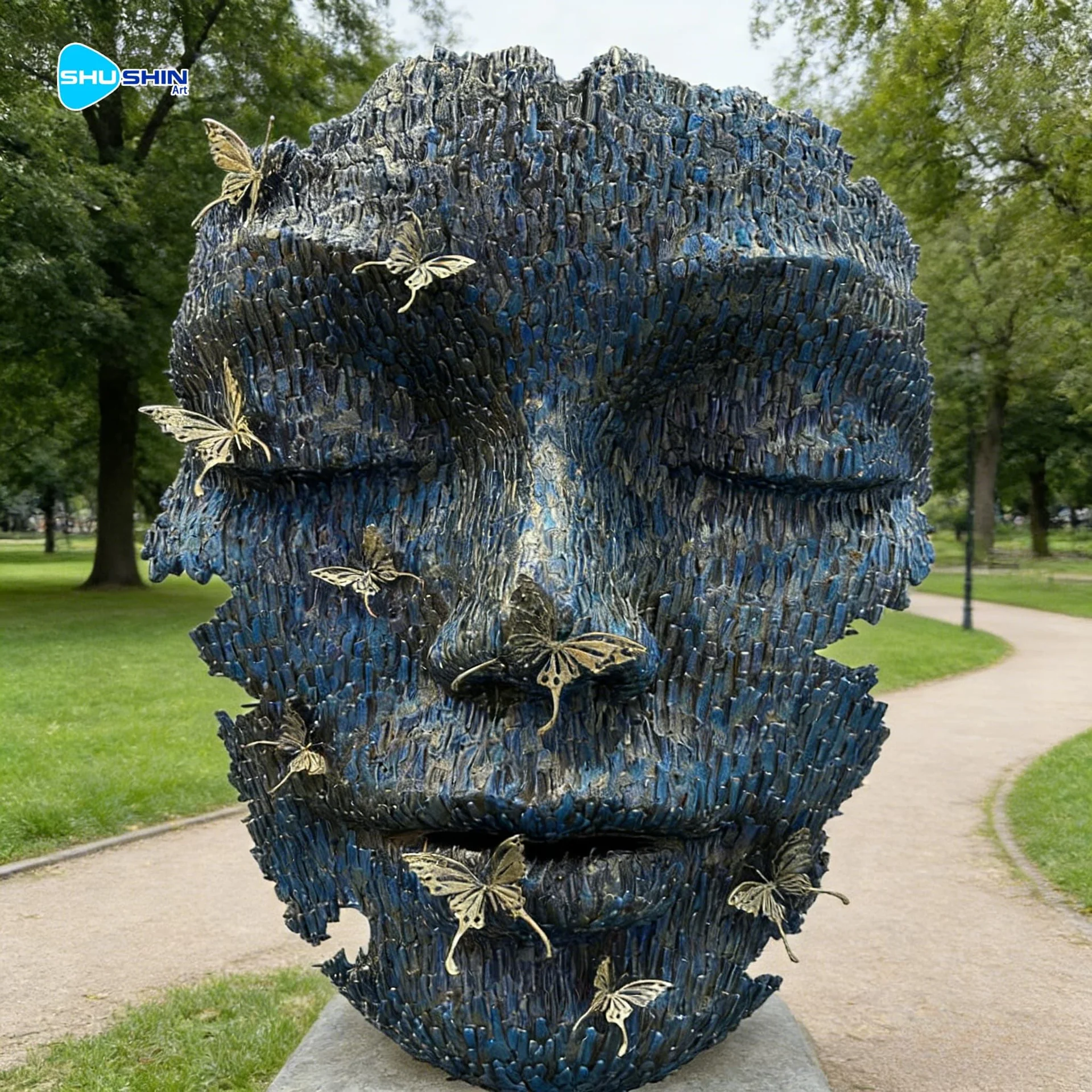
Public Art Installations — Site-specific work that may combine bronze with other materials. These projects usually involve the most back-and-forth during the design phase, because the sculpture needs to respond to its architectural or landscape context. Our work on outdoor public art sculpture projects covers this process in more detail.
Fountain Sculptures — Bronze is naturally compatible with water features because a stable patina is waterproof by design. We cast bronze fountain sculptures with integrated water routing when the design requires it.
What Information Is Needed Before Quoting?
One of the most common delays in a custom sculpture project is the quoting phase, simply because the client and the foundry are not yet speaking the same language. These are the items that, if provided upfront, make the difference between a 3-day quote turnaround and a 3-week back-and-forth:
1. Approximate scale — Height, width, and depth in meters or feet. Even a rough range (e.g., “life-size human figure, around 1.7m”) is enough to begin.
2. Subject and pose — Reference images, sketches, or a description of what the sculpture should depict. If the client has a specific historical figure or symbolic concept in mind, that context changes the modeling approach.
3. Installation environment — Indoor, outdoor, coastal, freeze-thaw climate, public-access (touchable), or secured location. This determines alloy choice and patina selection.
4. Budget range — Bronze sculpture pricing is sensitive to scale, complexity, and finish. A budget range helps the foundry propose a realistic production method rather than over- or under-specifying.
5. Timeline — From design approval to delivery, a typical bronze sculpture takes 8–16 weeks depending on scale. Rush projects are possible but affect both cost and patina quality.
6. Reference examples — If the client has seen bronze sculptures they like (or dislike), sharing those references saves time in aligning expectations. Our bronze sculpture product category shows examples of completed projects across different subjects and finishes.
How Bronze Sculptures Are Made
The lost-wax casting process has not fundamentally changed since antiquity, but the tooling and quality control have. Here is the sequence used at Shushin Art, which is representative of how a professional foundry approaches a custom commission:
1. Design Development and Scale Models
The process starts with either the client’s provided artwork or a collaborative design phase. If the client provides a 2D concept, we typically propose a small-scale clay or 3D model first (1:10 or 1:20 scale) to confirm proportions and posture before committing to full-scale production.
For figurative work, this phase is where anatomical corrections happen. It is far less expensive to adjust a 20cm clay model than to rework a 2-meter sculpture after casting.
2. Full-Scale Clay Modeling
Once the design is approved at model scale, we build the full-size original in clay or wax. For large sculptures (over 2 meters), the model is built in sections for practical handling. This phase typically takes 2–4 weeks for a life-size human figure.
3. Mold Making
The clay original is enased in a rigid mold (plaster or fiberglass mother mold with flexible silicone or rubber interior). The mold captures every surface detail. For complex sculptures, the mold may have 20–50 individually fitted pieces.
4. Wax Injection and Chasing
Molten wax is injected into the mold to create a hollow wax positive. The wax copy is then “chased”—seams and imperfections from the mold parting lines are hand-finished. This is detail-intensive work; a life-size figure may require 20–40 hours of wax chasing.
5. Spruing and Shell Building
Wax gates and runners are attached (the “sprue tree”), and the assembly is dipped in ceramic slurry repeatedly to build a hard shell. This is the “lost-wax” step—once the shell is fired, the wax melts out, leaving a ceramic cavity.
6. Pouring
Bronze is melted (typically at 1,100°C / 2,000°F) and poured into the ceramic shell. For large sculptures, multiple pours may be scheduled as the shell is broken open and sections are reveal-assembled.
7. Metal Chasing and Welding
The bronze casting emerges with sprues, gates, and seam lines. These are ground, welded, and blended so that the final surface reads as a continuous form. For multi-piece sculptures, this is also when sections are permanently joined.
8. Patina Application
The patina is the chemical coloration of the bronze surface. This is applied with heat and chemical solutions (nitrates, sulfides, ferric compounds) and then fixed with wax or lacquer. Patina work is as much art as craft—small variations in heat and chemical concentration create different effects.
9. Quality Inspection and Packing
Before shipping, the sculpture is inspected for structural integrity, patina consistency, and mounting preparation. For large sculptures, custom crating is required because of bronze’s density and value.
Bronze Patina and Surface Finish Options
Patina is where a bronze sculpture moves from “industrial product” to “finished artwork.” The same casting can look completely different depending on patina choice, which is why we always provide patina samples on small bronze chips before committing to the full sculpture.
Classic Brown — The most common choice. Created with ferric nitrate, it ranges from light chestnut to near-black depending on heat and concentration. Ages naturally outdoors to a darker, richer tone.
Living Green — Produced with cupric nitrate and ammonium chloride. This is the “statue in the park” green that most people associate with bronze sculpture. It continues to develop outdoors over time.
Black Patina — Achieved with sulfur-based compounds. Creates a matte, graphite-like surface that reads as very contemporary. Works well for abstract forms and architectural integration.
Partial Gilding — Some clients request selective highlighting (e.g., gilded lips or hands on a figurative sculpture). This is done with gold leaf or gold powder after the base patina is set.
Custom Patina Matching — For projects that need to coordinate with existing sculptures on a site, we can match a reference patina sample. This adds 1–2 weeks to the finishing phase but ensures visual coherence across a sculpture group.
A note on maintenance: a patinated bronze sculpture outdoors benefits from an occasional wax coat (clear microcrystalline wax), but it does not need regular refinishing. The patina is chemically bonded to the metal surface, not a surface coating that will peel.
Is Bronze Suitable for Outdoor Use?
This is one of the most frequently asked questions, and the answer is: bronze is among the *most* suitable materials for outdoor sculpture, but only if the alloy and patina are specified correctly.
Alloy Selection — For outdoor work, we use silicon bronze (C87600 or similar) or phosphor bronze. These alloys are specifically formulated to resist dezincification and stress corrosion cracking. Avoid “architectural bronze” (which is often a brass alloy) for outdoor sculpture—it will deteriorate in freeze-thaw and coastal environments.
Drainage and Mounting — Bronze sculptures that trap water inside (e.g., hollow-cast figures that are not properly drained) can develop interior corrosion over decades. Part of our specification process is ensuring that any hollow sections have weep holes or are sealed in a way that prevents standing water.
Freeze-Thaw — Bronze has a different coefficient of thermal expansion than stone or concrete mounting pads. For installations in freeze-thaw climates, we use mounting systems that allow for slight movement rather than rigidly bolting the sculpture to a fixed base. This prevents cracking at the mount interface over time.
Coastal Environments — Bronze performs well in salt air, but the patina development will be faster. A sculpture installed near the ocean will develop a green patina faster than one installed inland. This is not a defect—it is the material behaving as designed.
Packing, Shipping, and Installation Planning
Bronze is dense (approximately 8.8 g/cm³). A life-size human figure in solid-cast bronze weighs 150–250 kg depending on wall thickness. Larger sculptures can exceed 1,000 kg. This density affects every decision from crate design to site access planning.
Packing — We use custom timber crates with foam lining and moisture barrier. For high-value commissions, crates are built to ISPM-15 international shipping standards. The sculpture is wax-coated before packing to protect the patina during transit.
Shipping Coordination — For international projects, bronze sculptures are typically shipped by sea freight (less vibration than air, and cost-effective for dense cargo). For domestic projects, specialized art transport with climate-controlled trucks is preferred. The key lead time constraint is often not the foundry schedule but the shipping booking.
Installation — We provide mounting templates and, when needed, on-site installation supervision. For large sculptures, we coordinate with the client’s structural engineer to confirm that the foundation can support the point load. A 2-meter bronze figure on a 1-meter base creates a different loading pattern than a plinth-mounted sculpture, and the installation plan needs to account for that.
Our large sculpture shipping and installation guide covers crating methods, site access assessment, and installation sequencing in more detail.
How to Work With a Bronze Sculpture Foundry
Choosing a foundry is not just a sourcing decision—it is a collaboration that affects the final artwork. These are the factors we recommend evaluating:
Portfolio of Completed Work — Ask to see projects that are similar in scale and subject to what you are planning. A foundry that primarily casts small gallery bronzes may not have the capacity or the engineering experience for a 3-meter public art commission.
In-House Capabilities vs. Outsourcing — Some foundries outsource the patina work or the mold making. This is not necessarily a problem, but it adds coordination risk. At Shushin Art, design, modeling, casting, patina, and crating are all done in our Quyang facility, which means one production schedule and one quality standard.
Communication During Production — Bronze casting has irreversible steps. Once the wax is chased and the shell is built, changes become exponentially more expensive. A good manufacturer provides progress photos at each phase (clay model, wax, after patina) so that the client can flag concerns before the next irreversible step.
References From Previous Clients — For public art or large commercial commissions, speak with a previous client who received a sculpture of similar scale. Questions to ask: Was the patina consistent with the sample? Was the sculpture delivered on the agreed timeline? Were there any structural issues after installation?
MOQ and Flexibility — Some foundries only accept large-volume orders. We work with single-piece commissions as well as edition series, because many of our clients are installing one sculpture, not ten.
FAQ
How long does a custom bronze sculpture take to complete?
Production time depends on size, design complexity, casting details, and finishing requirements. From design approval to crated shipment, typical timelines range from 8–16 weeks. Rush production is possible but may limit patina options and affect surface finish quality.
How much does a custom bronze sculpture cost?
Cost depends on three variables: scale (cubic volume of bronze), complexity (modeling time and mold piece count), and finish (patina complexity and any surface gilding). Providing the six items listed in the “What Information Is Needed Before Quoting” section gets you a realistic range rather than a placeholder number.
Can bronze sculptures stay outside year-round?
Yes, when the correct alloy is used and the sculpture is properly designed for outdoor installation. Bronze develops a protective patina rather than corroding in the way that ferrous metals rust.
Do you work with the client’s own design, or do you provide design services?
Both. Some clients come to us with a finished maquette or CAD file; others need help developing a concept from a written brief. We can work at any point in the design process.
Is a patina finish durable?
The patina is chemically bonded to the bronze surface. Outdoors, it will continue to develop gradually, which is considered part of the material’s character. With basic care (occasional wax coating), the patina remains stable for decades.
Can bronze sculptures be repaired if damaged?
Yes. Bronze can be welded, patched, and re-patinated. For public art installations where accidental damage is a risk, we provide a patina touch-up kit and repair guidelines as part of the project handover.
Do you handle shipping and installation?
We handle packing and can coordinate with specialized art transport carriers. For installation, we provide mounting templates and technical drawings. For large or high-risk installations, we can arrange on-site supervision.
Start Your Bronze Sculpture Project
If you are planning a bronze sculpture for a garden, a public space, a religious site, or a commercial project, the most productive first step is a conversation about scale, subject, and timeline. We can work from a sketch on a napkin or a detailed CAD file—the important thing is starting the dialogue early enough that the design phase has room to breathe.
At Shushin Art, our Quyang facility handles the full production chain: design, clay modeling, mold making, lost-wax casting, patina, and packing. With experience in custom sculpture design, casting, surface finishing, packing, and international project coordination, we help clients develop bronze sculpture projects from concept to delivery.
To discuss your project, you can reach us through the contact form or by email. Include the information from the “What Information Is Needed Before Quoting” section above, and we’ll respond with a realistic production timeline and price range.