
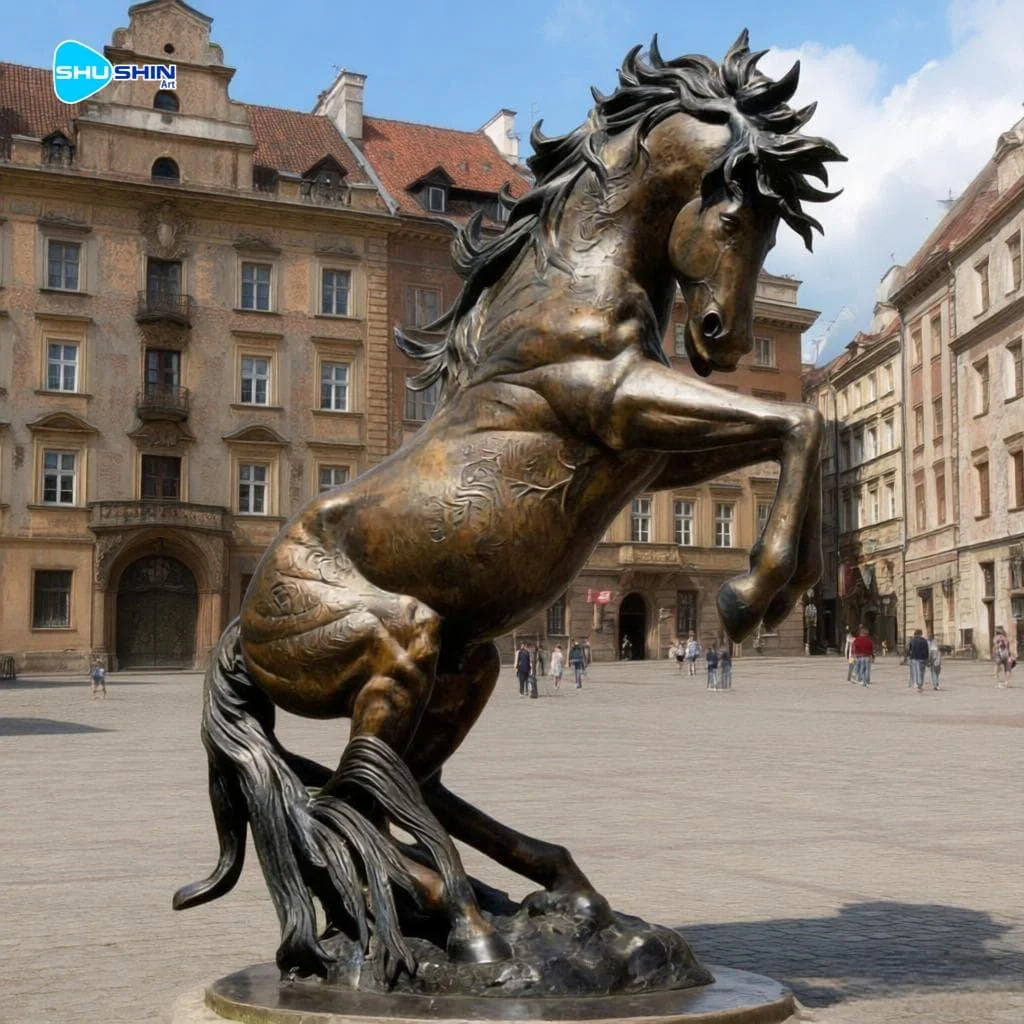
Animal subjects have occupied bronze sculpture commissions since the earliest documented lost-wax castings — the bronze bull and deer of Shang Dynasty China, the horses of the Parthian Empire, the hunting groups of Baroque Europe. The animal sculpture commission presents distinct challenges from figure work: the anatomical structure is different, the range of scales is wider, and the stylistic vocabulary — from hyper-realistic life casts to highly stylized contemporary forms — encompasses a greater range.
At Shushin Art’s bronze foundry, our animal sculpture casting team operates with reference libraries of animal anatomy that include veterinary skeletal studies, professional wildlife photography, and an archive of historical animal bronze precedents.
The Unique Challenges of Bronze Animal Sculpture
Animal subjects demand a different approach to anatomy than the human figure. Each species has a characteristic anatomy — the musculature of a horse differs fundamentally from a predator, which differs from a bird — and these differences must be rendered convincingly or the piece fails regardless of technical casting quality.
Anatomical Research and Reference Materials
Our animal sculpture designers work from a combination of sources: direct veterinary anatomy references for structural accuracy, professional wildlife photography for posture and behavior, and site visits to zoological collections for observation of live animals in specific poses. We maintain a reference library of over 3,000 wildlife photographs covering the 80+ species we most frequently commission.
Coat, Feather, and Scale Surface Treatments
The surface of an animal bronze must convincingly render the subject’s covering — the fine detail of a bird’s feathers, the scales of a fish, the texture of hide versus fur. Our chasers specialize in surface texture reproduction, with dedicated techniques for each major covering category: avian (feather), mammalian (fur, hide, wool), reptilian (scales), and fish (scales and fins).
Casting and Engineering for Animal Forms
Hollow vs. Solid Casting
Life-size and monumental animal sculptures are cast hollow using the lost-wax process, with wall thickness typically ranging from 4mm (small mammals and birds) to 12mm (large animals and equines). Hollow casting significantly reduces weight and material cost while maintaining structural integrity when combined with appropriate internal armature.
Multi-Section Assembly
Animal sculptures over 1.5 meters in any dimension are typically cast in multiple sections that are fitted and bronze-welded during assembly. Section planning is a critical design step — poorly planned sections create visible seams at the finished joint line. Our casting engineers plan section lines in consultation with the designer, ensuring that all seams fall within natural shadow lines or contour changes on the animal’s surface.
Patina Finishes for Animal Sculptures
Naturalistic Patinas
Animal sculptures intended to read as naturalistic typically use patina specifications that match the living animal’s coloring as closely as possible — within the limitations of chemical bronze patina, which cannot produce the full spectrum of animal coloration. Our patineur works from reference photographs to develop the closest achievable match to the target animal’s coloring.
Verde Antigua and Aged Finishes
For installations in heritage landscapes, classical gardens, and period properties, the verde antique aged patina is specified for animal sculptures. This finish, which develops a stable blue-green surface over time, creates a sense of historical permanence that reads as appropriate in classical and heritage settings.
Frequently Asked Questions
What species do you most frequently cast?
Our most frequently cast animal subjects are: horses (all sizes, all periods from classical to contemporary), dogs (all breeds, particularly sporting and working breeds), deer and stags, big cats (lions, tigers, leopards), eagles and raptors, wolves, bears, and bulls. We also produce exotic species including elephants, giraffes, primates, and marine life on commission.
Can you produce a bronze of my pet or a specific animal?
Yes. We accept pet portrait commissions from photographs. The level of accuracy achievable depends on the quality and angle coverage of the reference photographs — we require a minimum of 8-10 photographs from different angles for a life-like result. For prized animals (champion dogs, beloved horses), we recommend a life-casting session if the animal is available.
What is the lead time for a custom animal bronze?
Custom animal bronze sculptures (life-size or smaller) require 12-20 weeks from design approval to delivery, depending on complexity, current scheduling, and size. Monumental animal sculptures (above 2 meters) require 16-28 weeks. Standard catalog animal figures (small to mid-scale) in existing designs can ship within 6-10 weeks.
Related Resources
- Custom Bronze Sculptures — Full bronze casting capabilities for animals, figures, and fountains
- Bronze Animal Collection — Catalog animal designs ready for customization
- Custom Marble Sculptures — Stone animal alternatives in marble and granite
- Request a Custom Animal Bronze Quote — Submit your project specifications